In my not-so spare hours of the day not devoted to writing
The Windy Side of Care (I only have 6k words left which means that in two or so days I should be done.) I have decided to browse cover-design ideas for my books. Whether I end up self-published or go the traditional route, there is one thing I will have: an awesome cover. I believe that the author ought to have some idea of what they want the cover of their book to look like or--at the least--to know the difference between a bad and good design. Hence, my diatribe...
There is nothing that brushes my fur the wrong way like a poorly designed, obviously amateur cover. I mean honestly. Sometimes I look at a book and think, "Oh, darlin'. I might read that if it wasn't so ugly." Because even though everyone knows the old adage about "You can't judge a book by its cover", we all
do. The cover of your book is how you're selling yourself because if you can't lure a reader over by the appearance of your book, you'll never get them to become captivated by your characters and story. And though the inside of the book (like the inside of a person) is the most important part, you're doing yourself no favors putting forth a dowdy or childish presentation. I was on Pinterest, pinning
eye-catching covers, and I decided to search Self-Published book designs. I have seen cheesy professional covers, but if we are to be honest, the ugliest covers are found in the annals of self-published novels. I found this hypothetical cover...
...making a fun (and heart-wrenchingly ugly) poke at what
The Hunger Games might have looked like if it was self-published. {Note to self: never use
papyrus or
bleeding cowboys fonts if you want to be taken seriously. }With this example, I set off to put together a post of covers that work and most definitely
do not work, and to discuss the differences with you. Please note that I have read very few (if any) of these books and cannot tell you if they're any good or not. Also, my thoughts on the cover-design are not intended to slam the authors' taste, but to point out where it works and doesn't work for my own taste. Not every one of these books is self-published, so I am aware that they range in quality. Please don't get ruffled and shout things like, "WELL THEY COULD AFFORD A PROFESSIONAL!" I am interested in discussing
composition.
What works: I like the guy and the way his palm is outstretched with the ring in the center. And I love how you can't see his face. I don't like being fed an image that never matches with my mental picture of characters. (especially Christian fluff that end up looking like those wretched Harlequine Romances you find by the drove in a thrift-store)
What doesn't work: The font. Everything is one font, one color, and aligned left. There was little to no imagination in the set-up of the text, and this immediately screams "SELF-PUBBER" to me.
How to fix it: Imagine this could be a pretty cool cover with a bit of tweaking as regards filters. This is pretty one-dimensional. Also, if the text was just cramped and blah, you could do something pretty cool with writing the title on the guy's palm instead of a ring. I think that would be a good use of your somewhat limited space, and a bit more interesting.
What works: For me, pretty much everything. I don't know anything about this book but I can tell it will probably involve Spies, Nazis (brilliant touch with the swastika), and a woman who appears to be trapped by her own loyalties. If I could get a cover design like this for
Fly Away Home, I'd be forever happy. Note the use of three different kinds and sizes of fonts for interest, and the way the two photos (above and below the center stripes) use the same filter. This is what I meant with the cover above when I said it needed a filter. Something to tone the light and shade down so it isn't so glaring and raw, and to blend all the elements together.
What doesn't work: Really, there isn't anything sticking out that makes me think, "ew". I could do with less face because like I said, I don't like the cheesiness of face shots (full-body shots are far worse) but since her eyes are dropped, it works. And I love the veil
How to fix it: Run with this cover far, far away from everyone else who will want it for their own. (Ahem. Meeee? Ahem.)
What works: I like the filter used here, and the background image is pretty good, though there ought to be a bigger difference between the shades of sea and sky.
What doesn't work: Again, the font is horrifically monotonous. Not only is it all the same size and style, but the subtitle is rendered almost unreadable (it says "a tale of the Titanic) by the mirage-effect put on it. I am getting a headache from squinting at it right now.
How to fix it: When a book has nothing but a landscape-image on the front, I subconsciously assume its characters were too boring to make the cover. Or the personalities were too flat to occasion thought when the author went to make a cover. I know these authors were probably trying to go for the midnight desolation of a sinking-ship tragedy, but I'd request at least a teeny little row-boat bobbing along in a swath of moonlight to intensify the mood.
What works: I love this cover too. I love the ship in the background and the way we are seeing from behind the girl. I love the mood, and I most especially love the pop of crimson in her skirt to add life to an otherwise foggy cover. Also, I love the design along the bottom.
What doesn't work: It'd be nice to see a little more text. Maybe a subtitle or a quote from the book on the front because there's a bit of empty space up toward the top. Maybe that's purposeful, in which case leave it. All in all, I love this cover.
How to fix it: Add a bit of "what people are saying" or something at the top, or leave it as is. I like this cover.
What works: Fantasy is one of the hardest genres to create a good cover for, because one step in the wrong direction and you're sunk. This is a pretty cool cover. I like the illustration--that's how dragons are supposed to look, Mr. Man-Who-Made-
The-Dawn-Treader-Movie. I mean
honestly. The colors are great, it looks interesting, and bravo to the creativity with text-arrangement!
What doesn't work: It's a bit duo-chromatic, being entirely green and brown respectively.
How to fix it: More color would be nice, (some purple or navy shadows in the lake?) but
I'm liking the author's choice to keep it simple and effective. Well
done.
What works: I admit, I'm a sucker for covers with awesome graphic-art. The black and red design is just gorgeous, and I love the unexpected blue smack in the center.
What doesn't work: Umm...it doesn't really give you an idea of what the book is about, which leads me to believe it's a literary novel which, in its turn, reminds me of stuffy people on an airplane who only pick up a book when their iPhone battery dies. I like literary novels, but most people who read them are dull. This is probably a book about a girl in India who was abused or something and has a secret orchard where she keeps jars with all her bitterness toward these people written on scraps of papyrus, and this helps her learn forgiveness.
How to fix it: Well if it is a literary-novel then they've made their point and personally I like this cover a lot. If not, then the author/publisher needs to adjust their cover design to better portray the story.
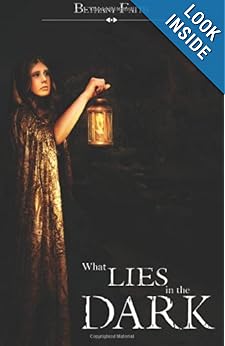
What works: I like the actual picture. It's interesting, it isn't too revealing as to exactly who this person is, and the lantern is a nice touch. The font is actually pretty and I like the accent-bar up at the top.
What doesn't work: There is too much dead-space in this cover. And since there's light being thrown back onto the girl from her lantern, I think there ought to be a faint glow on the rest of the cover. Also, a sure sign of being self-published is using your first and middle name only. (Bethany Faith) People in real life have last names, so real authors have last names unless you're
Avi, in which case we can forgive you, or if you've otherwise stylized yourself for a specific reason. If you are one of those people who shy from revealing their identity, then by all means make up a pen-name. But give your alter-ego a last name because it just looks more professional.
How to fix it: Add a lantern-glow on the blackness. I get that the point is to make the book look dark (hence the name?) but a little glow never hurt anyone. I think the glow would fill up the blankness of the right side of the the cover. Also, get a last name. Truly, though, this is a pretty schnazzy self-pubbed cover and I actually think the book looks interesting and promising.
What works: If I can't have
Where Treasure Hides for
Fly Away Home's cover, I'd like something like this. The girl is halfway-hidden, I love the glimpse of a town behind, and the filter used in the photos tells me its vintage if everything else fails. Also, notice the variation of scripts and sizes. Lovely.
What doesn't work: Unlike the example above of Bethany Faith (thanks for your patience, Miss Faith. I'm sure you are a fine author and I tip my hat that you've actually got books in print), Michael E. Glasscock III has surrendered himself to forever being identified in my mind with P.G. Wodehouse characters.
How to fix it: Either he's aristocracy and thinks himself entitled to drawling on and on in the credits, or he ought to have chosen either a middle initial
or the III. Having
both seems pompous. Some people might also find the introduction of the purple tab up-top to be annoying. I rather like it, as it adds interest and lets you know that this is Book 2 of a series. But if it bothers your sensibilities, take it off.
Your thoughts? Do you agree with my observations of this sampling of covers? And how important is cover-design to you? Leave all your thoughts, mind-wanderings, and what-not in a comment below and I shall reply with promptness. I'd love to hear what you think are the most important (and/or bothersome) elements in the composition of a cover-design.






 Posts
Posts