Showing posts with label indie publishing. Show all posts

Thursday, March 26, 2015

PENDRAGON'S HEIR Debut!

My dear chaps and chappesses. It is my great pleasure to announce to you today that Suzannah Rowntree's debut novel, Pendragon's Heir, is available for purchase! There has been some little difficulty with Kindle but Suzannah has that being worked out from afar. In the meantime, Pendragon's Heir is looking stunning in paperback! And I have the pleasure of letting Suzannah onto The Inkpen Authoress for a chat about the romance in this tale of

Romance Fixin’s
Suzannah Rowntree

Some people seem to be born with a writerly itch in their bones. Not me. I can be classified into that class of author who was a reader first and always—a reader moreover who, being disappointed with a shortage of the exact kind of reading she likes, decides to write something of her own for a change.
For me, one of the ways this manifests is as the temptation to write as a fixer. Something bugged me in that book I recently read? Well, I’ll put in my book just for the pleasure of doing it right!
And nowhere in my work on Pendragon’s Heir—my debut novel and so far only completed full-length work—was this impulse stronger than in the romance.
You see, I have read so many, so very many novels, most of them featuring romances, and most of those romances failing to satisfy either my common-sense or my artistic standards. From wish-fulfilment heroes who push social and physical boundaries (Mr Rochester, I’m looking at you), to the sheer twitterpation (a word neatly coined by my amiable hostess) infesting most of today’s romances, which focus more on the colour of the hero’s eyes than on actual interesting things like saving the world or building a city or questing for freedom and truth, the world seemed so full of unsatisfactory romances that I relished the chance to construct a really good one.
So today, I’d like to list a few of the goals I had in writing the Pendragon’s Heir romance—hoping they will provoke some thought and encouragement!
A Romance That’s About Something
The first important ingredient was the purpose of love and marriage. Marriage is meant to be about something bigger than just the two of you and your feelings. Ultimately it’s about building the Kingdom. It’s about the cultural/dominion mandate. It’s about the Great Commission.
Because marriage is about signing up together for a splendid adventure, I knew that the romance in Pendragon’s Heir had to be about a mission. This is actually the compelling force that draws my two protagonists together: although Blanche dislikes Perceval at first, she eventually comes to realise that they are on the same mission. This is the common ground on which they begin to build their friendship. For them, love and adventure become inextricable—and I think it’s the same in real life.
Mutual Help and Comfort
I recall being tremendously inspired by Leland Ryken’s wonderful book Worldly Saints: The Puritans As They Really Were. There, in the chapter on marriage, you can find many excerpts from Puritan love letters and teachings on marriage. One of the major themes coming out of this chapter is the powerful sanctification these men and women found in each other’s company. Their love for each other manifested in building each other up spiritually.
I saw something similar in many of the romances I appreciated most, from Jane Austen’s novels to Charles Williams’s, and I knew I needed to include the same thing in my own novel. Not only are both my protagonists on the same mission, they eventually realise that they are stronger together than they are apart. Sometimes, it’s Perceval helping Blanche to understand the rules of honour and duty in an alien world. Sometimes, it’s Blanche encouraging Perceval through disappointment and grief. Either way, each of them supplies something lacking in the other. And for me, these moments of help and comfort are the most romantic parts of the book.
Principles and Applications
I have to admit, I’m a fairly standard good homeschool girl. I hope that if the Lord brings someone into my life, we’ll court rather than date. It’s not a topic I’d stay up at night arguing about, but I think it’s reasonable to save your first kiss for on or close to your wedding date. I think it’s helpful to be intentional about marriage, to keep physical boundaries, and to seek the counsel of one’s parents and mentors. These are relatively minor issues for me, but I know why I hold them.
I also know that not everyone in history has held them. And certainly I know that concrete applications of general principles have varied widely across history.
As I wrote the romance in Pendragon’s Heir, I knew my protagonists needed to share my general principles. At the same time, though, I knew that their temporal and social position—nobility in anachronistic Arthurian Britain—would result in quite different applications. In the end, I ended up using two strategies to make sure I could stand boldly on my convictions while allowing my characters to be themselves.
First, I let them make mistakes. I allowed them to learn from experience, rather than coming to their romance with a preconceived set of notions. Fiction, being a dramatic medium, is well suited to dramatise the reasoning behind a certain application—so, in allowing my characters to do things I didn’t personally see as wise, I also had them learn from their experiences.
Second, I attempted to use the actual applications that historically existed in my characters’ general time period. Parental involvement, for example, was far more formal and expected then than now. In fact, if you were a noble, male or female, your marriage was often arranged as a matter of state, and this is more or less the situation in which both my protagonists find themselves. In fact, at one point in the plot, I knew I couldn’t delay resolving the romantic conflict any longer because beyond a certain point, their liege lord would step in and resolve it for them!
Again, these are relatively minor issues for me. But it was important to me that my book be consistent with my principles while retaining artistic integrity. If this is something you struggle with, I’m here to tell you to take heart: you can retain the integrity of both your principles and your art!
Superverting the Saturnine
Finally, there was one particular aspect of my romance that I just had to put in, more for giggles than anything else. Romance from Jane Eyre to Twilight (yes, I did read it—for laughs) has given us an endless parade of subversive, saturnine romantic heroes. You know the kind. They range from the rude (yes, Mr Darcy, this means you) and criminal (MR ROCHESTER) to the vampiric (Sparkles Cullen) and the downright abusive (supply your own candidates). Romance readers seem to get a real kick out of snobs, rakes, bloodsuckers, and worse. Me, I was a bit over it.
My hero, I decided, was going to be a nice, normal, well-adjusted boy with no dark secrets, no interest in pushing physical boundaries, and no rebellious streak. He would neither brood nor succumb to jealous furies. He would not even be strong and silent; he would be voluble and ebullient. He would be everything that St Bernard of Clairveaux first recommended for knights and which, later, Baden-Powell recommended for Boy Scouts: Trustworthy, loyal, helpful, friendly, courteous, kind, obedient, cheerful, thrifty, brave, clean, and reverent.
He would be huge fun.
But he would not be a doormat, either. Good doesn’t have to be boring, weak, or a pushover. Perceval was going to be all these things—and he was also going to be fierce in battle and uncompromising in his beliefs, no matter what the pressure to conform.
Yikes, I Hope You Like It, Folks
As you can no doubt tell, I really enjoyed writing the romance in Pendragon’s Heir! It was huge fun, not just to explore some of the basics of love and marriage, but also to get some pet peeves out of my sytem. The only thing left is to hope that you enjoy it half as much as I did. You’ll have to let me know!

Author bio:
When Suzannah Rowntree isn’t travelling the world to help out friends in need, she lives in a big house in rural Australia with her awesome parents and siblings, trying to beat her previous number-of-books-read-in-a-year record. She blogs the results at www.vintagenovels.com and is the author of both fiction and non-fiction. Pendragon’s Heir, her debut novel, released March 26.


Blanche Pendragon enjoys her undemanding life as the ward of an eccentric nobleman in 1900 England. It's been years since she wondered what happened to her long lost parents, but then a gift on the night of her eighteenth birthday reveals a heritage more dangerous and awe-inspiring than she ever dreamed of—or wanted. Soon Blanche is flung into a world of wayfaring immortals, daring knights, and deadly combats, with a murderous witch-queen on her trail and the future of a kingdom at stake. As the legendary King Arthur Pendragon and his warriors face enemies without and treachery within, Blanche discovers a secret that could destroy the whole realm of Logres. Even if the kingdom could be saved, is she the one to do it? Or is someone else the Pendragon's Heir?


Monday, February 23, 2015

Anon, Sir, Anon: I'll Sign My Name To It

DID you know that sometimes people fancy copies of books with a little scrawl inside them called an "autograph?" And sometimes people fancy them even more if they are acquainted with the author of said book. Well folks, I am here to tell you that autographed copies of Anon, Sir, Anon are now available for purchase from The Bookery! If you are interested in getting your copy of this charming mystery and would like an autographed version, send an email to theinkpenauthoress@gmail.com and I will be in touch with you. Cheers! I look forward to doing business with you, my dear readers.


And if you so choose to spread the word via sharing this link on Twitter or Facebook, you're a more than decent creature and I'd like to shake your hand.

Monday, October 13, 2014

Mad-Hatters, Ebola, and Indie Publishing


Hello, Lords of the Earth, their luxury and ease.
(Name the references and I'll love you forever and a day.)

I am generally hectically, marvelously, horrendously, good-griefishly busy with putting together the Anon, Sir, Anon release party. Thank heavens I only have three interviews and four guest posts left to write. I am in a rush solely because wedding preparations are buffetting the family and I need all publicity work for the Fifth of November utterly finished by next week....including finishing up editing my proof and applying the edits and uploading the new file and... indie-pubbing isn't for the faint of heart. But it's a load of fun, too. It's like self-inflicted torture that you really don't mind, deep deep down.
In my spare moments, I have been taking a creative break in Inktober. Essentially, you draw something with an ink pen in every day in the month of October. I joined late but I've been enjoying it. Technically, you are allowed to draw in pencil first and trace over it in ink, but I have sworn all the way and go with it if it isn't horribly muddled. Thus, the outcome isn't my finest work...but it's less than shabby. I think it is a wonderful creative exercise to have to fly with something--no editing allowed. In the spare moments leftover from the spare moments, I have dabbled a bit with Scotch'd the Snakes and managed to finish reading Have His Carcase. Now let's see if I can finish The Book Thief, which should be retitled: The Book That Never Ends Part Two (Les Miserables being the first volume.) It's not that it isn't good--it's fabulously well-written if a little rich, but it's just so stinkin' long. My fault, I believe, is that I watched the movie first so I feel rather like a balloon whose air was let go. Rather flabby and let-down. There is no suspense in it for me.

And in the spare ends of the spare ends of moments, I sometimes panic about pandemics.
"I'm not saying you have Ebola, but one of us has Ebola and it's not me."
Germ-X, plez. And I'm afraid I'm not terribly compassionate because you know what I feel like doing with the continent of Africa right now? Locking it in a room and going all Mad Hatter on it:


Yeah. Apparently stress, busy schedules, and book releases reduce me to this. So sorry. Looks like I'm not exactly going to win a Nobel Peace Prize anytime soon.

Cheers, darlings!
    May the germless winds always be in your favor.

Friday, October 3, 2014

Independent Authors? Not Really


"What have you written, madam?"
"A...a book. I call it a novel."
"And for whom do you write?"
"Literate Society."
(brain fragments)

I've been arranging my blog tour for Anon, Sir, Anon. The "birthday party" will extend from the release date (November 5th) through the course of a week (November 11th). There will also be a super fun giveaway, so please keep your eyes out for this. Also, I got the proof of Anon, Sir, Anon in the mail. I am now reading through it and seeing what needs tweaking before sanctioning the thing entire.  Yesterday, I crept into a real-live library with my proof copy and wandered among the stacks feeling terribly clandestine. I also made the "mistake"  of picking up Raymond Chandler's The Long Goodbye and flipping to the first page. I have this thing about the beginning of novels. I like to see how great writers achieve what they achieve. Gosh, he's good:
"There was a girl beside him. Her hair was a lovely shade of dark red and she had a distant smile on her lips and over her shoulders she had a blue mink that almost made the Roll's Royce look like just another automobile. It didn't quite. Nothing can."
Stephen King talks about good description making a reader "prickle with recognition." That description up there made me prickle. I love being in awe of certain lines. Of course, Anon, Sir, Anon doesn't measure up to Raymond Chandler--I don't pretend it does--but I was still proud to carry it into that library and leave with it in my hands and think quietly to myself, "November fifth is not so far off."
Feeling awkward while posing in a parking lot after a long workday. Hence, my scarf is awry.

There is a common failing among young authors who are striving to find a balance between humility and pride in their work, and this failing could be labeled as "comparison". The prideful crowd always overestimates the value of their literary contribution and seems to think that they've written something award-winning (it happens, but rarely). The humble crowd lets comparison become the thief of joy and can barely lift their heads to realize that they've gifted the world with something better than Captain Underpants, and there's something in that. My natural bent is to fall in the latter category, but as I've grown in my craft and as a person (the two often entwined) I have come to realize that you have to have a bit of both. And it can be hard. I am easily swayed into thinking little of my writing when I read something like old fancy-pants Chandler's Roll's Royce line, but the thing that really gets my goat is when I read something fabulous by one of my "colleagues." It's easy for anyone to admit that Raymond Chandler is a better writer than most. I mean, really now, how many people have reached that level of legend? But when you get "pen-slain" by a someone in your genre, your age-group, or in your pool of writing friends, it can be debilitating. I know I am never more vulnerable than when comparing my work to the work of someone in my world. It's really a hard-scrabble thing. We're both young hopefuls who have poured a considerable amount of time, effort, creativity, (and money) into the product we present to the public...and we are, after a fashion, competitors. I don't have a fighting spirit about most things. I take simple pleasure in lines of my own that I think are especially good and I am just as quick to applaud someone else. I've never understood the shrinking-pie mentality of some people that make them reluctant to interrupt their blogging schedule to announce a colleague's release, or refuse to mention a contemporary's book they've read and enjoyed for fear of distracting the readership down other avenues than their own novel.

We call ourselves independent authors but we're really terribly dependent on just about everything except a publisher. We depend on readers to buy our books, we depend on readers to review our books, we depend on readers to recommend our books. We depend on bloggers to blog about our releases, giveaways, or sales, we depend on fellow writers to let us peek into their pool and share a little of their untapped resources. The prideful among us keep these resources to themselves and do well for a while--I am reminded of Dickens's description of Blandois in Little Dorrit:
"He had a certain air of being a handsome man--which he was not; and a certain air of being a well-bred man--which he was not. It was mere swagger and challenge; but in this particular, as in many others, blustering assertion goes for proof, half over the world."

By putting themselves out as as the best thing since squeezed lemons, the prideful crowd gains a following. That following, however, grows very slowly. The prideful crowd wants homage paid, but refuses to pay for homage. They are never against being featured on a writing blog (provided it has at least five-hundred followers), but as to featuring someone on their blog, well they really couldn't possibly fit it in anytime in the next three months. The humble crowd, on the other hand, is easily immobilized. They forget all about networking, being involved in a community, and publicity of any sort because, really, who would want to bother with their book when there are so many others--much finer--in the world? 

Surely there is a peaceful shore between the two. I am constantly striving to think enough of my work while still admitting the extent of my talents and abilities, and I have so much enjoyed becoming a more active part of my indie-author community. We do depend on each other and none of us are so fabulous as to be able to succeed without a boost from our companions. That being said, The Inkpen Authoress is available to help those of you who need that hand. I want to lend my blog space, my readers, my friends, my community to support up-and-coming authors. I couldn't succeed in my indie-publishing journey without you. You can't succeed without others either. Let's stop comparing and continue working together.

Much Love,
            Rachel

Monday, September 29, 2014

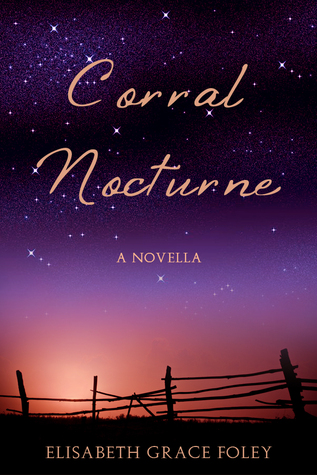
Presenting: Corral Nocturne by Elisabeth G. Foley

While we are all waiting eagerly for Anon, Sir, Anon to enter the public world on the Fifth of November, there are several other books in the wings that I find somewhat abate my sense of "NOVMBER FIFTH MUST COME NOW." I have already mentioned Jennifer Freitag's Plenilune which descends October 20th, and today it is my pleasure to recommend a sweet, fresh novella: Elisabeth G. Foley's Corral Nocturne. Foley has earned my respect and admiration in many ways and her newest novella, due November 1, 2014, further cemented my satisfaction. Please add the book on Goodreads and, as always, if you are given the privilege of reading a book by an indie author, do them a favor and review it when you've finished. We may call ourselves independent, but we really rely on ratings to help spread the word. 

Also, the cover is gorgeous.


Having enjoyed Elisabeth Grace Foley's Mrs. Meade Mysteries Vol. 1, I was quite prepared to enjoy Corral Nocturne, but I wasn't certain how the author would effectively spin a Cinderella story out of prairie grass and homespun. I shouldn't have been worried. The mark of a good writer, for me, is that they have consistency. Foley is nothing if not consistent. From her mysteries to her blog posts to Corral Nocturne, Foley knows her stuff and writes it effortlessly. Most experiences I've had with Westerns has come from watching the old black and white films, by which I mean that I am not terribly "up" on the Western setting. Enter Foley, with her gentle descriptions that show me the beauty of the West and the tenacity of its people and explains, without seeming to explain, the genre.
Elisabeth Foley has a way writing rich settings: stories set in places where you can see the story world reaching farther than the bonds of this book. Corral Nocturne, while being a lovely Cinderella-style story (and yes, she managed it!), also gave me a sense of wanting more. I would love it if Ella and Cole had had more time together, for their relationship to grow. In fact, I would not have minded spending an entire novel with them and getting to know the people mentioned in passing. That being said, if you enjoy a quiet, gentle romance by the rose-purple light of a prairie dusk, read Corral Nocturne. Do

Friday, May 9, 2014

Being a Hybrid-Author: Inside Scoop on Both Publishing Worlds

By early June this year, I will be a hybrid-published author. What does that term even mean? It means that I will have at least one project in print by independent means (Fly Away Home) and at least one project in print by traditional methods (Five Glass Slippers). In an age where services like Createspace offer ways for an author to see her book become a bound, printed reality, is traditional publishing being edged out toward becoming unnecessary? In a conversation on Twitter, author J. Grace Pennington suggested I do one blog post centering on the pros and cons of each form of publishing for anyone curious to see the publishing business from both sides. To that end, I've constructed this post to walk through the writing-publishing process and give you the drift from both sides: traditional and indie pubbing:

Step One: Write the Darned Thing

Indie authors: Write what you like. No one really has to love this book but you.
Traditional authors: Write what you like. Someone has to love this book besides you, but we'll worry about that later.

Step Two: Editing/Rewriting

Indie authors: Get as many people as you can to read this book and point out all your errors. Fix these errors and rework it thrice or four times.
Traditional authors: Get at least three people to read your book and help you edit. Critique partners work well for this stage. Rewrite with an eye for your target audience.

Between Stages two and three, if you are a traditionally published author, will be the querying and/or contest winning stage wherein you will secure a publisher for your book. Here, the paths of the two diverge.

Step Three: Further Editing
Indie authors: Keep at that editing. The measure of honor in an indie-pubbed novel is how well it is edited. The fear of most readers in buying an indie novel is that it will look and sound homemade. Uh-uh.
Traditional authors: You will receive a line-in edit for your novel at this stage wherein are notes from your editor/publisher about Things That Need Fixing. This could be the addition of scenes in certain places, the cutting of dialect or certain lines of dialog, the changing of the ending, the changing of names, the clarification of relationships, the news that Google actually doesn't know Italian. Make these changes in the file and send back to the Editor. This could need to be repeated once or twice more, depending on your aptitude in making requested changes.

Step Four: Design/Formatting
Indie authors: Hire a cover-designer unless you happen to be super with digital art. I cannot stress this point enough. The other measure of honor in an indie novel is whether it actually looks like something someone would pick up without being begged on bended knee. This is also the formatting stage. You will need to decide if you are doing an e-book version of your novel and then format the novel into paperback and ebook formats. If you're awesome, you will do a lot with interior design. If you are not like me, you will make it look professional and breathe again when it is finished. This is the stage where you begin your project in Createspace and make decisions like Glossy or Matte, Cream or White, and the size of your pages (all of which, in some measure, has bearing on the formatting and design). When you've done formatting, you'll upload your final PDF and correct all the problems the Format-Checker found. You'll upload the Final FINAL PDF and order a proof copy. When you've received your proof copy, it's time to sit down with a red pencil and circle all the spelling, punctuation, or formatting mistakes you've still found after a bajillion edits on the computer. When you've applied these edits (and/or found and fixed design problems) go ahead and approve the proof!
Traditional authors: This stage is, perhaps, the reason so many authors love the traditional method. You have to do absolutely nothing except (in some cases) approve/advise the cover design, admire the gorgeous interior design file that finally makes it your way, and check through the galley proof file for any last-minute changes you will make. The one difference is that sometimes there are a few lines (insignificant lines) that are not absolutely your own. Slight words changed, or a simple "she walked down the stairs" inserted here or there. If you think too hard about it, it can irk the One Who Published Indie And Kept Everything, but it is how every traditionally published book works. There are certain little changes the editor is entitled to make.

Step Five: Marketing/Publicity
Indie authors: This is the stage that will decide whether you are actually going to make it as an author or not. That sound scary, I know, but it is really quite practical. You'll need to build your platform (a blog is an excellent way--kudos if you already have one), email every writing-inclined person in your address book and beg for interviews, email book review sites and beg they'll accept an e-ARC (Advance Reader Copy), schedule interviews and guest posts, join Goodreads and create an Amazon author profile, figure out what the blazes Shelfari is and then discard it as a bad idea, and choose your release date. You'll probably be majorly stressed in this stage, but when it is over and your release-party and/or blog tour is spinning merrily without you, it feels so good. I haven't gotten into the stage of arranging newspaper interviews or television spots or anything, but you can certainly win hearts that way, I'm sure. Talk about your work, not in a narcissistic way, but as your profession, which it is. Show people your work. Run giveaways and host other authors on your blog. Join Twitter and Facebook as a way to connect with more readers. Be real and personal and embrace your brief moment of glamour. Work hard. It's worth it.
Traditional authors: Read above paragraph. Yep. Increasingly, the job of marketing and publicity rests much upon the shoulders of the author. Gone are the days of letting your publisher do everything for you. As the author, you are the one readers want to know. They want to hear your words, see bits of your writing process and life. They want the real deal and publishers are okay with that. The author can't expect to leave the best interest of their children in the hands of someone who didn't give birth to that child and expect them to carry it the entire life of the novel, right? That's like ... creepy.

So there you have it, world! The pros/cons and paradoxes of being a hybrid author! I hope this post helped answer any questions some of you might have, and if I have failed to address anything, leave a question in a comment below and I'll do a follow-up at some point. I am blessed to have the chance to work in both publishing worlds and cannot wait to do it again and again. Cheers!

Friday, February 28, 2014

Indie Publishing: What you Didn't Know You Were In For


"Letters of business. How odious I should think them." 
-Caroline Bingley
What most people think of when they think (at all) about an indie author is probably some entirely erroneous picture of a weird kid in a washed out denim jumper who never bothered to get braces for her bucked teeth, wears her hair parted straight down the center of her head (and tucked behind both ears) and doesn't really have all her social graces pegged down. That, or they think of some really awesome person who spends their week literally choreographing sword-fights and practicing fencing with frequent interruptions to run to the desk and type out what just happened.

Indie Author = Rachel Heffington

What people don't realize, is that the moment he hits "approve proof" on Createspace, that indie author has suddenly become a businessman. I didn't realize it, going in. Yeah, I knew marketing was a bit part of getting your name out there and getting your books read. I realized that I would be required to juggle social media and pay attention to other blogs, authors, and book releases. I didn't think that I'd suddenly find myself with enough PR work to effectively employ someone like Callie Harper herself to help me keep afloat of it all. Thanking people/replying to tweets, replying to Facebook messages, replying to emails, writing blog posts, tweeting, writing Facebook posts, sharing links, arranging and answering interviews, reading blogs, puffing other books I enjoyed to begin to integrate into this wild world of self-pubbing, keeping up with Goodreads, reviewing books I've read to help other authors....the list is enormous and I have to write myself a daily to-do list to keep track of any of it. And still things slip behind the desk and I dig them up a week later, feeling terrible I forgot to reply to that pretty much imperative email from that author. There are reviews to read, respond to, and share and you must keep your book in the public eye, too, which means sharing the purchase link tactfully and sweetly and trying to self-promote (good business) while not being annoying and pushy (good friend).

Indie Author + Publicist = Rachel Heffington

That's not all. See, now that I've learned to add publicist to my growing list of talents, there's yet another side of the Indie business I didn't see. That is, quite literally, the side of business. There are books to be autographed, packaged, and shipped. Shipping means going to the store and buying bubble packages, carting them home, addressing them, taking them all to the post office the next day and explaining to the astonished Post-Master than not every one in the towering stack is going overseas and needs a customs form. (Thanks, Mama) Hosting giveaways means that the giveaway winners must be contacted and their addresses procured, their prizes purchased, and their packages shipped. Then, as if that wasn't enough to remember, Paypal withholds payments until you've entered shipping information. I could have done that on Monday if I'd known. Now my payments are all a week behind because I failed to enter the information till this morning. Createspace pays you once a month (provided your royalties add up to at least $15.00) but did you know that your Kindle royalties don't begin for sixty days after the first day of the month in which you made your first sale? Now you have cash flow issues, because you didn't factor the wait in while thinking about your expenses. So you borrow money for shipping/handling and new blog design and other things off your (rich) younger brother and promise to pay him when your royalties finally come around. Then you find out that you forgot that Barnes & Noble actually does carry your book online, so you go around tooting your horn about that and wondering how you managed to overlook that pertinent piece of information. And, yeah, in the middle of all this, you somehow remember you're an indie author still and ought to be working on your next book instead of retweeting articles about how to market effectively.

Indie Author + Publicist + Business Manager = Rachel Heffington

The life of an indie author is far more complicated than I anticipated, but I find the business exhausting exhilarating. All decisions are in your hands, yes, but that means you get to decide. All the PR is up to you, but that means you get to interact one-on-one with your readers, which is precious. All the money has to be juggled and transferred and waited on, but it will be yours in all its littleness someday. And all the writing is up to you...but isn't that why we became writers in the beginning? Don't be discouraged when you publish your novel and realize that it was more work than you anticipated. Every indie author deserves a reward for wearing three hats (or more) at once. There's a community of authors who have done the exact same thing as you, many for several novels. Ask questions, work hard, and you'll get it. I was discussing the subject of this post with a friend recently, and she verbally recoiled, saying, "This is why I plan to publish traditionally." I get that feeling. Sometimes I have looked at my to-do list, the crumpled receipts littering my desk, the blank chapter of Anon, Sir, Anon waiting for words to be poured into its memory, and I think: "Dear God, why didn't I stick it out?" But if I had stayed with the idea of traditional publishing, I wouldn't have learned everything I have so far. I wouldn't trade all the PR, business experience, and hard work for the (comparative) ease of having a major publishing house do it for me. Maybe someday, when the market has changed, I will stick my neck back out into the traditional pubbing world. Maybe not. I do know one thing, though: this experience of indie publishing has taught me so much already, and I'd like to shake hands with the first brave man who cast off from the main wreck and paddled to sea in his own little row-boat. To the stubborn over-achievers: we few, we crazy few, we band of indie-pubbers.

(also, digital Fly Away Home is $2.99 through the weekend, so get your copy if you haven't already.)