Showing posts with label the scarlet-gypsy song. Show all posts

Wednesday, January 16, 2013

C- Cecily


Killsfeather Court was just there—a block away—and in that court she knew she would find the Macefields. Bother the Macefields and every other family that required a nanny. Couldn’t she have been banished to the business of…cookery, perhaps? But no, it had to be nannying, and the family had to be this one. One would think that the heroic deed she had performed would be rewarded with some semblance of attention to her wishes. But no. Her term on earth had begun with a firework of ill-premonitions; service to the Macefields the worst of it all.
-The Scarlet-Gypsy Song


Cecily Woodruff {Lady Cecelia} is an interesting character to write for the bald reason that--quite simply put--she's out of place. The duration of The Scarlet-Gypsy Song, Cecily is out of her proper realm. This world is entirely new and different and she made the choice to come anyway. Though I would never peg her as the Christ-like figure in Gypsy Song, Cecily definitely mirrors Him in this way:
She leaves her proper home--the child of a King--and descends into another to save her people. Unlike Jesus, however, her sacrifice is not enough to turn away the dogged Fitz-Hughes. Her sacrifice, in fact, only angers him and spurs the clashing sides onward, culminating in pillage and rapine across the lands.

As she is a stranger to this world, I had the opportunity to write her character full of odd quirks. Cecily's life as the princess of Scarlettania has been a life of gentle pursuits, quiet pleasures, and lush surroundings. As she admits, there were no lessons for the royal daughter to prepare her for the life she would lead as a nanny in hopelessly prosaic London. Accustomed to being a person of consequence, Cecily's character borders on pretension, snobbishness, and narcissism--all perfectly forgivable if you think of where she came from and where she is now.

This is a subtlety we often overlook as writers.

Where has your character come from?

What influences of culture, position, and family have made her what she is?

Yes, Cecily is a kind young lady, and a sweet one. Her heart is in the right place, and she loves her people. After all, didn't she bring all this on herself voluntarily? But if I wrote Cecily as the classic, perfect princess, her character would not be half as believable. A girl whom for sixteen or seventeen years has been catered to, looked up too, and lauded would not immediately transform from that position to a humble nanny of the Macefields. Especially in the first several chapters, the incongruities of London and Scarlettania are painful at best, and I like it that way.

You wouldn't move to Helsinki and promptly feel at ease among the culture, language, and people. (Unless you already live in Helsinki, and which case I tip my proverbial cap to you.) There would be a transitory period in which the topmost clashings of culture would be all that was apparent to the general eye. So it is with Cecily Woodruff--this beautiful and misplaced princess of Scarlettania.

Of course she adjusts over the duration of The Scarlet-Gypsy Song, and one of my favorite parts involves Cecily and that wretched Mrs. Macefield teaming up to accomplish something that will once again rescue Scarlettania.

Oh yes. She's a very good girl in her own right.


She gathered her skirts and her hair into her arms and trundled down the last three stairs and across the black-and-white tile floor. At the door to Mr. Macefield’s study she closed her eyes and rested her forehead on the wood paneling. What a predicament for any self-respecting woman—much less a princess—to find herself in. The cheek of these earth-folk. The children probably did it out of sheer malice—something about her not being as good as Nannykins—whoever she was.
-The Scarlet-Gypsy Song

Thursday, January 3, 2013

B- Banter


"Tha's tryin' to jest the jester!"
-The Scarlet-Gypsy Song

A large part of the way I enjoy interacting--or watching others interact--with people is banter. For me, a movie that has a so-so plot but sparkling dialog can be saved. Same with books. So it was only natural that, granted the nature of The Scarlet-Gypsy Song, I should include plenty of banter. There is a distinct difference between Banter and Verbal Sparring, and I made sure to include much of the latter whenever I introduced the former. Like Jenny Freitag said, the two are completely different animals.
Banter is good-natured jibing and teasing, while Verbal Sparring is jibing and teasing with intent and reason; often to discomfit the opponent--not to elicit a laugh from them. I think of banter like friends playing chicken-fights in the water, while verbal sparring is like playing stick-knife with a real knife and a gang of rough-and-tumbles standing at the ready to pound you if you win.
Essentially, The Scarlet-Gypsy Song is a book full of characters that are all too clever for their own good. They each have a rather high opinion of their intellect, and it can result in tidy little tit-for-tats. The challenge in writing it, of course, was not to let bantering go too far on its own. Often I turned what had been banter into verbal sparring, because who really wants to sit and listen to banter on its own for eight paragraphs?--certainly not I. But banter is a fabulous way to ease into a tense situation. The tone is light, congenial, and then suddenly turns desperate.

“I have no wish to fight you.”
“Haven’t you?” Mockery and contempt mingled freely in Diccon’s tones. What a donkey this fellow was—he wondered with idle curiosity whether Peter Quickenhelm was at all related to Sir Roger Guillbert, but the thought was brief. There were more important matters at hand. “You call yourself a soldier, and yet you are fearful of meeting a man in fair combat?”
Peter raised his eyes and all the pride of a wounded lion flashed from them and scalded Diccon. “Is ambush considered fair combat?”
Diccon observed him with his head on one side and a pitying eye. “Many a wiser man has answered that question: ‘All’s fair in love and war,’ or haven’t you heard? I rather think you are besotted with love—or something rather cruder—for these damsels. I—” he put a hand to his leather veskit, “—am a man of war. Therefore, I deem it fair combat, and you, my chosen opponent.”


The beauty of banter and verbal sparring is that it wards off melodrama as effectively as Thief's Oil wards off illness. I have used banter to lighten moments of danger, but it's also equally effective in romantic scenes--a tactic I used more than once in my other novel, Fly Away Home. See, I'm not a big one for deep, dramatic dialog. I enjoy reading it sometimes (especially in older books) but I don't choose to write it--it isn't a natural tone for me. When you are writing with a sweeping, emotional voice, it can be hard to avoid coming across as melodramatic. That is when the all-purpose tool of banter or verbal sparring could save the day. Try it, and see how it works out for you!


Diccon turned around and caught Adelaide’s eye, then smiled. He approached her and extended his hand. “Ah, my own sister—let me escort you to the very capable hands of that fierce little wench—Dear-Heart, was it? You look in need of a good wash.”
Adelaide laughed. “Doubtless you are right—and yet it is not the bearing of a gentleman to say so.”
“Is it not a gentleman’s duty to tell the truth? There—I have silenced you.” He laughed and patted her shoulder. “Get you to the chamber and clean up—it will be a mighty evening.”

Monday, December 31, 2012

A- Adventure


I am a great one for jumping on band-wagons, aren't I? It seems that my ideas for blogging are very seldom my own--and good reason. I don't claim to be supremely clever, and when a dashed good idea has already been created by someone who is supremely clever, I don't see a call to change it. The band-wagon I speak of this time, is the A-Z event that several authors I know (Jenny Freitag and Anne Elisabeth Stengl to begin with) have done. The general idea is that I will write a post for each letter of the alphabet running right through the course of one of my novels.
Just as Jenny chose Adamantine for her A-Z event because she was not actively working on it and therefore didn't get much time to speak of it anymore, so I have chosen The Scarlet-Gypsy Song. You've heard much of Fly Away Home, and it's almost through its last edits before I pack it off to the agents and hope they want a saucy little inspirational romance. The Scarlet-Gypsy Song hasn't got much space here for some time, and I want to remedy that as I go back through making edits and rewriting. Hence, I give you the Letter A.

A- Adventure

The maid folded her hands over her stomach and sighed. “Well if he had been the sort of father to read things to his children, you’d know all about us.”
Adelaide felt her world growing and shrinking all at once in a dizzying fashion almost as bad as the music-box. “You mean—”
“Aye. We’re all his characters. This is his story. We are all at his command, y’might say. Whatever he writes we live.”
“And we’ve stepped into it?”
“Aye. Right into the darkest days Scarlettania has ever seen.”

I'm sure it will come as no surprise to you that half a dozen children tumbling into their father's story-world are bound to have adventures of some sort. I mean really. Voice-changing panthers and traitors and villains and a country at war with its neighbor is not the sort of thing calculated to conjure up a dull game of golf. You're bound to fall in with a rough crowd or two. It only compounds the error when your father is the one supposed to be writing these "adventures" for you and he...well...slacks off in his writing for a bit and these so-called adventures start to run out of hand. Then you've got kidnappers to deal with...kidnappers and full out battle...and second kidnappers...and really third ones if you want to be picky about it.

“Adoniram—you simply can’t let Darby and Bertram go to battle—you can’t. It’s…it’s…indecent! If it was happening in London someone would call the Agency.”
             The pen stopped. The head rose. The eyes glared. “My love—it is not happening in London. There has not been a battle in the streets of the Capital since the time of your grandfather. Therefore, I would greatly appreciate your silence and a cup of tea.

Of course this certainty of adventure excites Adelaide, Bertram, Charlotte, Darby, and the babies....at first. Afterward? Well...there is no guarantee they'd be scrambling for first-row tickets...or perhaps they would. One never knows with this sort of thing. At any rate, The Scarlet-Gypsy Song has enough plot twists to furnish full-time adventure for six children. I should hope they enjoyed a moment or two of it. 

Cecily pulled Mrs. Macefield toward the tea-things and, like an automaton, began the process of making tea. What a very strange story this had become.

Friday, September 28, 2012

The fickle art of Pouncery


“But we must stop and think,” Bertram said, collecting the scraps like a grave-robber, “If Pouncing is the same as making loud sorts of noises.”
“Great snakes—what do you mean by that?” Adelaide squirted a spray of orange-peel oil onto her hand and painted a face on the polished table-top with it.  “Father said most specifically not to make loud noises. Is Pouncing a noise? No, of course it isn’t. So we aren’t disobeying. Anyway, ten o’clock is too late for any nanny to sleep, no matter how new she is.”
-The Scarlet Gypsy Song

In sitting down in earnest to begin editing The Scarlet Gypsy Song I am discovering things about this book and these characters that I'd forgotten about since I finished the book back in the spring. For one thing, I gave myself a pain in the neck with POV problems...attempting the all-seeing-eye and then abandoning it in favor of something less confusing. Argh. 
But the Macefields are a group with talent, class, and some good old Victorian swag. In one of the earlier chapters I happened upon a dissertation on the fickle art of Pouncery by none other than the imps of the family: Adelaide and Darby.


Darby slammed the window shut and wandered to the mantle-piece, hands balled up inside his trousers pockets. He eyed the clock—ten-fifteen. That was it. “Are you lot coming or not?”
Adelaide bounced to her feet and grabbed Charlotte’s arm so she couldn’t protest. “We’re coming!”
Bertram grinned and raked the last of the toast-scraps into his pocket, then picked the littlest twins up like two sacks of potatoes and carted them out of the nursery with the others. They tip-toed down the hall and gathered at Miss Woodruff’s door.
“Shall we give her the Bully Scamper, or the Gollywhumper?” Adelaide asked. Pure delight sparkled on her face at captaining a rumpus again.
Darby felt the way she looked: they had been too good since running Miss Perdue off, and he felt like an old saint. “The Gollywhumper.” He wriggled with anticipation. “Creeping in and then jumping scares ‘em a whole lot more than busting through the door.”
“Right. Well then, here’s how it’ll be. We’ll creep in, and—Fergus and ‘Genie? You two remember to keep quiet. We’re not hurting Miss Woodruff, only Pouncing her, so don’t go and wail over it, huh?”


There it was that we got a lesson in How to Pounce. Let's review the steps and rules of this mysterious childhood art--you might just want to try this at home sometime.

1. Don't hurt your victim

2. If you want to perform the Gollywhumper you must creep then Pounce.

3. If you want to perform the Bully Scamper eliminate the creeping and go straight from nothing to Pounce--the quicker the better with this one.

4. A Pounce is not a noun, it's a verb. Therefore "pouncing" cannot be classified as a noise, and we are safe from Mr. Macefield taking us by our shirt collars and locking us in the Conservatory for the afternoon to Think About What We've Done.

Well, there you have it. Many thanks to Darby and Adelaide for coming up with the League of Pouncers. May we all live to a ripe old age and never have trouble with our knees.

Wednesday, May 23, 2012

Beautiful People: Growlbeard; Lord of the Night.


So this month's Beautiful People appears to be about villains. Aha aha. Well, I never did tell you much about Growlbeard, Lord of the Night from The Scarlet-Gypsy Song. I am afraid you won't understand much about this panther-chap unless I tell you. 


1. What is their motive?
Motive? Must the Lord of the Night have a motive to do what he wants? I suppose his motive in jumping Darby and Peter Quickenhelm was to gain their information for himself before they reached Fitz-Hughes with it.

2. What are they prepared to do to get what they want? 
Absolutely anything. Though, like any cat, Growlbeard tends to want to play with his capture before killing it.

3. Are they evil to the core, or simply misunderstood? 
Manipulative would be a better word. He is a loner and gets what he wants when he wants it. Usually it is through evil means, but Growlbeard can put on the purring charm if he wants to.

4. What was their past like? What about their childhood? Was there one defining moment that made them embrace their evil ways?
Ever since his kitten-hood (and that being a thousand years ago) Growlbeard has known nothing but what the Scarlet Gypsy taught him. It was she who taught him voice-changing so that he can sing like a bird or speak like a man. Now that she has been dead for so long he still walks in the paths she taught him. In that way he is tied to her.

5. Now that they’re evil, have they turned their back on everyone, or is there still someone in their life that they care for? (Brother? Daughter? Love interest? Mother? Someone who is just as evil as they are?)
Growlbeard is only attached to the memory of the Scarlet Gypsy, and to himself. He's rather narcissistic.

6. Do they like hugs?
Come again? I can't imagine Growlbeard getting a hug from anyone, even the Scarlet Gypsy herself.

7. Are they plagued by something? (Nightmares, terrible thoughts?)
Nothing concerns Growlbeard except the worry that someone else will eclipse him in spying on both sides and relaying information.

8. Who are they more similar to: Gollum or Maleficent?
Both. He's got Gollum's treachery and Maleficents...malice. :D
9. If your villain could have their choice of transportation what would it be?
His own four paws. They are more than adequate enough to take him all through the Stridings of Scarlettania.

10. If you met your villain in the street, how afraid would you be? Are they evil enough to kill their creator? 
I would be intrigued rather than afraid, I think. Growlbeard wouldn't kill me right off. He'd probably taunt me and tease me and then prick me with his frightening, moon-white claws. 


       "...my mistress loved me and I was greatest success--the most beautiful, gorrrgeous, and enchanted of all her creaturrres."        "You mean...there were more of you?" Darby whispered.
        "We were a legion." The hissed reply hung in the corners of the grotto and filled Darby's being with shadow-winged dread.                                                              -The Scarlet-Gypsy Song

Saturday, March 24, 2012

The Scarlet-Gypsy Song--a last hurrah!

As a sort of Last Hurrah for The Scarlet-Gypsy Song, I thought I would give you some of my favorite bits from the past few weeks. I've been writing like mad--Thursday I wrote over 4,000 words. Enjoy these last few pretties from my dark-haired child! :)
Darby squeezed his fists where they were tied behind his back, feeling that somehow it helped him to think clearer. A clumsy movement beside him brought round a faint hope. Peter Quickenhelm! If Darby could only get Peter to be the object of the panther’s attention for a moment, he might have a chance to slip away. After all, wasn’t it a well-known zoological fact that panthers would stop and gobble whatever you dropped behind you? At least that’s how they told it in the books—that’s why people escaping from panthers often arrived to safety wearing no shoes or hat or jacket or—sometimes—anything at all. Yes. It was an applauded tactic in the old world. Perhaps beasts were similar here.
Darby drove his heel into Peter’s side—hard.
“Ow—whatsermatter?”
Darby took this to mean “what’s the matter” and since it also meant that Peter had regained consciousness, he smiled to himself and kicked again.
-The Scarlet-Gypsy Song

“Adoniram—you simply can’t be letting Darby and Bertram go to battle—you can’t. It’s…it’s…indecent! If it was happening in London someone would call the Agency.”
The pen stopped. The head rose. The eyes glared. “My love—it is not happening in London. There has not been a battle in the streets of the Capital since the time of your grandfather. Therefore, I would greatly appreciate your silence and a cup of tea. Miss Woodruff—er, Lady Cecelia. Would you be so good as to teach my wife the proper way to do it?”
Mrs. Macefield fluffed her skirt and pursed her lips. “I am certainly capable of making a cup of tea, Adoniram.”
“Doubtless. Nevertheless, the need of tea is imminent and one or the other of you must make it, or I’m afraid the boys will be done for. You’ve no idea what a horrid business it is, writing a battle. I’ve no more idea of what happens in a battle than…than a cockroach does! There are only so many synonyms for ‘hack’ and ‘thrust’ and ‘parry,’ you know. They’ve been hacking and thrusting and parrying for several chapters now and I feel quite exhausted for them.”
-Ibid.

Diccon shifted and gave a smile that was both shy and roguish. “In faith, my little sister, you showed yourself a bit of a vixen.”
Adelaide laughed and curtsied with an arch pursing of her lips.  “A fox caught in a trap is never over-careful of her manners.
-Ibid.

Darby hugged Diccon a bit tighter and shrugged. “I’m fine—I was just wondering if this daft plan would work.”
“Catching the panther in his lair, you mean?”
“Right.” Darby felt Diccon’s muscles rippling under his shirt, and it inspired him a bit of manly courage. “ ‘Course I’m not scared—I’d just think Growlbeard would be too smart for this sort of trick.”
Diccon laughed. “He is a clever beast, but a cat all the same—likes naps in the sunshine and doing his dirty deeds by night. Coming upon him like this in the full light of the morning—we’re like as not to catch him.
-Ibid.

Darkness, punctured with the honey-gold globes of lamplight, filled the banqueting hall. Echoes of that feast before the battle still seemed to whisper in the corners, discussing this new, half-somber celebration. On the dais the King sat, Lord Diccon Quarry at his left hand—Captain Sparrow’s seat at his right empty, as is the custom when a beloved man has died. The Macefield children fanned out on either hand—even the babies—and waited in silence.
For it was silent in the hall—very silent, with a warm sense of expectation that was curiously in keeping with the gold-stitched gloaming of the hall. Lad, Dear-Heart, and Agnes waited like kindly wraiths in the deeper shadows at the end of the table.
-Ibid.

“Oh, Diccon,” she whispered to herself. She had not thought he was by. She had not meant for him to hear those sorrowful words, but his rough hand closed around hers a moment later and she looked up to see him beside her. He did not look at her, and he did not speak, but his hand held hers and she knew all was right.
-Ibid.

Tears ran down Adelaide’s cheeks and blurred the sight of the king’s noble face, pooling it together with the shimmering, honey-colored globes. She tried to stop her tears but it was no use. This fierce ache was familiar somehow, and she had to weep. Why was it familiar? Adelaide could not say, but as she mused on the king’s words it came to her. He had said it was The End…this feeling was that of turning the last page of a splendid book, only magnified and heightened and altogether unbearable. Adelaide sobbed once, and it thrummed through the hush of the hall, startling her into silence again.
Diccon put his hand on her shoulder and squeezed it. He leaned over and put his mouth close to her ear. “There now, sister-mine. We are only parted by the cover of a book. When you miss me—or any of us—too too much, you have only to ask your father to read to you. I’ll be waiting there for you…there amongst the pages, and you will always be able to find me.” There was a catch in his voice, and when Adelaide wiped her own tears away she saw that Diccon’s jaw was set in a determined line and a lone tear glistened on his cheek as Jupiter or Mar glistens in a winter sky.
-Ibid.

Gone was the dusk-dim light of the banquet hall. Gone were the honey-gold globes. Gone were Diccon and Dear-Heart and all the rest, and Adelaide saw she stood on the strangely familiar marble staircase of…home.
-Ibid.


Friday, March 23, 2012

And so we part. :' )

It is finished. I have just completed The Scarlet-Gypsy Song! I am almost sorry to be done with this book--it is my favorite of all my "children". But I will not be dismal. It is a great triumph to have written a book in just 4 months, in my opinion. :) I also went past my goal-length, which was another triumph, and I had success with plotting and pacing! The last chapter might just be my favorite...I will say, the last chapter will probably make you cry. :P

So here are the Stats:

Clocked in at: 75,543 words
Chapters: 24
First line: "There was Nannykins to begin with, but she had a bad knee and left for the North."
Last line: "The End is rather a long way off, I think; we've only just come to the Once Upon a Time." :)  Favorite Character: Diccon Quarry--First Lord of the East Striding
Least Favorite Character: Dear-Heart, actually. She irritated me for some reason--she's rather a busy-body.

Needless to say, I am very happy today. :)

Thursday, March 22, 2012

Beautiful People: Diccon Quarry and Adelaide Macefield

Slightly nabbed from Jenny. :P
In linking up with Beautiful People this month, I am a bit sad to say that this will probably be the last month dealing with my family from The Scarlet-Gypsy Song. The book is over 69,000 words as of today, the big battle has been fought, and all that is left is to wind up all my loose ends and get everyone back where they ought to be. This month's challenge has to do with two characters. They can be any two characters, only they must have a relationship with each other. The two people that immediately came to mind are Diccon Quarry and Adelaide Macefield. I had not known they would end up being with each other so much, but there you have it. Enjoy. 


1. Do they believe in anything that most people think is impossible?


Nothing impossible--Diccon is a very capable man, and he tends to think he  can handle everything, therefore nothing is impossible. Adelaide is an optimist, therefore she never thinks anything impossible either.

2. Are they strong, or the "damsel/knight in distress" sort?


A strange expression lit his eyes—half fierce, half curious, entirely determined.
“What? Why are you looking at me so?” Adelaide asked. She tossed the feather aside and watched it drift into the grass.
“I was only wondering,” Diccon said. He toyed with his knife, tossing and catching it as some children play with an India-rubber ball.
“Wondering what?”
“What you’d do if I captured you.”

Diccon does rescue Adelaide at one point, however Adelaide was in distress without being too...distressed over it. Diccon and Adelaide are both what are commonly called "strong spirits." Diccon is rough and clumsy with relationships, and yet he is good at heart. He doesn't know where is loyalty lies and it confuses him. Adelaide, however, is loyal to many people--she feels things passoinately. If she hates you, she hates you. If she loves you, she'd die for you.


3. Do they have a special place? (e.g. a corner in his/her bedroom, under a tree...)


Diccon's special place is in the fray of battle. He is in his element there, every fiber alive, every talent taxed and stretched and used to their height. I think he loses himself in the excitement and forgets his troubles--it is almost a drug with him.
Adelaide has no particularly special place at all--anywhere she is admired, I should think.

 4. What occupation do they have, or plan on having?


Adelaide's ambitions follow her whims. She has thought of being an actress, once upon a time, but she would be a house-maid if it would bring her the sort of admiration she craves.
Diccon wants to be an honorable man. That is all he covets.

5. Describe their current place of residence.


Diccon has no home at present. Adelaide is staying in the royal palace of Scarlettania...


Below lay a valley and in the valley a castle—turreted and towered, glistening in the wash of moonbeams as if it were made of sugar cubes.

6. Explain their last crisis. How had they changed when they came out of it?


Oy. Well, this is rather an interesting question, as Diccon and Adelaide are only together because of a crisis. You see, Adelaide and Dear-Heart had been kidnapped by a defector of the Scarlettanian army. He was going to sell them to Fitz-Hughes in exchange for protection for Scarlettania. Diccon happened upon the scene and rescued the girls. It is too late to return to the castle, so they spend the night at Diccon's camp--during the night, however, he begins to question how he ought to act...

        The warrior-blood of Diccon would not be at ease in the company of a Scarlettanian. True, for an hour that evening, he had thrown aside his tangled heritage—any thought of faithfulness to Gildnoir. But as the night deepened, so did the labyrinth of his mind and strange thoughts and stranger loyalties cavorted there in a ghoulish ring.
      Perhaps he owed it, not to Fitz-Hughes, but to his father, to be faithful to the Gildnoir. True, he had defected, but he could remedy that and do one last service. What would that service be?
       Diccon once again scooped a glance of Adelaide’s sleeping form and held it up to his mind’s eye: A daughter of Macefield—a pretty bird to keep in a pretty cage.
Diccon says as much to Adelaide--she confronts him, rebukes him, turns vixen, and bites him with her wit. In the end, the two are closer than ever--sibling-souls parted by two worlds.

 7. If they could drive any kind of car they wanted, what would it be?

Car? Come now--that's not fair. There are no cars in either London or Scarlettania at this point. The Authoress takes the liberty of deleting this question.


8. How do they deal with change?


They revel in it. Both Diccon and Adelaide crave adventure--the more change the better. They thrive on the unexpected.

9. If they had to amputate one body part, which one would they choose?


I will take Jenny's answer and say their left-hands. That would leave the right hand for proper sword-play.

10. What would their favorite be at the local coffee shop? 


Diccon would drink his brew black. Adelaide pours an embarrassing amount of sugar in her cup, then licks it clean for good measure.

11.  How did they meet?


In that first crisis:

“Thank you, kind sir.” The merry, sweet voice behind Diccon startled him—he’d nearly forgot about the women-folk.
He turned about and smiled. “No trouble at all, my lady. I was merely passing this way. And may I have the honor of knowing whom I rescued?”
The girl curtsied, and he saw that she was very young. “Adelaide Macefield, and my companion, Dear-Heart.”
Diccon drew a deep breath through his teeth. A daughter of Macefield! By all the blood of Clan Fitz-Hughes, it was unexpected. So she was one of those whom Growlbeard had told him of. Diccon felt a strange sense of fear, as if he looked upon a goddess in the form of this tall, comely girl with the bluff voice. He crossed his left arm over his chest and extended his first two fingers, then bowed in the style of his country.
Adelaide laughed and clapped her hands. “It was rather brilliant of you—saving us like that. Rather like watching the plays Darby and Bertram used to put on. Hamlet was our favorite, you know. It had the most smashing duel.” 


12. How do these two deal with conflict?

The same way they deal with any other crisis: Expertly. They are not ones to be worked upon my surprise--dull, everyday monotony is what would affect them most.


13. Do they have a special song, phrase, item, or place? 

Not particularly. Unless you count the Scarlet-Gypsy Song which was rather important in Adelaide's life, at least.


14. What kind of things do they like to do together?

Haha! Escape...rescue...ride like the devil toward battle... :)


5. Describe their relationship as a whole in 3 words or less.


Loyal. Fraternal. Clumsy-tender.

Thursday, March 15, 2012

Full Cast: Anarchy.

There is one problem with character-driven fiction. The problem is one that I imagine every president, king, Sheik, and Tzar would feel: that dilemma of ruling your people. Yes, you must let your characters develop and you can't rule them with an iron-fist--your book would feel stilted. But there is something rather anarchical about character-driven fiction.
Let me start by saying, my books are character-driven. I unashamedly admit it. Perhaps this style was born of an early love for all the great characters in literature: Anne Shirley, the Pevensies, Sara Crewe, Hans Brinker, the Moffats, and so many more. This love was followed up by a self-inflicted crash course in Dickens who--as we all know--has more characters than anyone knows what to do with. [The beauty in this, of course, is that they all manage to play important roles, but that's for another post.]
I suppose I began on this topic because of my good-humored frustration with all the people in The Scarlet-Gypsy Song. This book is already over 60k words and they will not clam up! :D I am finding more and more characters to follow and though I am keeping the book focused, they will all have their part. It's madness how these book-people simply leap onto the page and demand I do something with them. Would you like to hear a (nearly) exhaustive list of all these sorts? I will pretend that you do, and therefore I introduce the cast of The Scarlet-Gypsy Song. Enjoy.

The Macefields:

Mr. Adoniram Woolcott Macefield--an author
Mrs. Macefield--a nervous invalid
Bertram: a twin
Adelaide: another twin
Charlotte: second first-twin
Darby: second second-twin
Eugenie: third first-twin
Fergus: third second-twin.

~If that was confusing, just say it this way: There are 3 sets of twins. They seem to be a disease with me. ;)~

Men of Gildnoir:

Sir Randolph Fitz-Hughes--clan chieftain and self-styled "prince"
Diccon Quarry (Diccon Wanderlands)--Half-brother of Fitz-Hughes
Crimp--grubby fellow (body and mind) who stylizes himself Diccon's "chum"
Host of Soldiers--unnamed. :)
The former Chief of Gildnoir: Diccon's father--a cruel, unjust, but marvelous warring man.
The former Queen of Gildnoir: Diccon's mother--a bride stolen from her betrothed husband, King Octavian of Scarlettania.

People of Scarlettania:

King Octavian: The king of this realm
Lady Cecelia: The princess of Scarlettania--known to the Macefields as Cecily Woodruff
Lad: the court-jester
Dear-Heart: Lad's daughter--a dwarf-girl, and a chamber-maid
Agnes: Plump, pressing, efficient, petting castle-keeper
Windteeth: The highland pony that falls into Diccon's possession.
Captain Phillip Sparrow: Darby's ideal--a noble, valiant soldier
Peter Quickenhelm: A Benedict Arnold of the blackest dye.
Kingdomers: The fill-in-the-blanks people in the tale who make appearances at banquets, festivals, and the like, and who would make you feel a void if they were left out.

Miscellaneous Characters:

The Scarlet-Gypsy: A beautiful enchantress whose power is still felt through the work of her favorite...
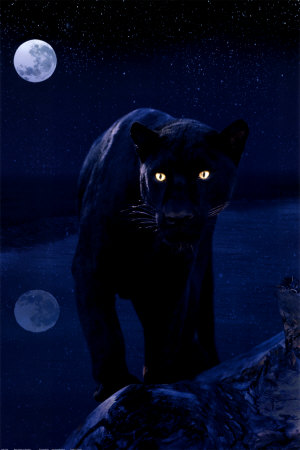
Growlbeard: The favorite--a traitorous, black panther with the ability to change his voice.
Mr. Garrison: The Editor. A very important personage.

Yes. You read that correctly. A full two-dozen characters, each of which has a particular part to play. I make it a rule never to put in a character "just because." I mean, of course you must write a throng, but let at least one of the throng have a distinct face! :)
Some of these characters were not there from the beginning--particularly Phillip Sparrow and Peter Quickenhelm; one I have a growing love for, the other I was glad to surrender to his fate. Sadly, two more of these characters mentioned are slotted to die during The Battle. :'( But it must be done, and I am sure it will be for the best.
It is not easy writing a book driven by characters and keeping it on task. I will have loads of rewriting to do, I know, but I have been keeping rein on these book-people of mine and finally brought the 6 plot threads down to 4 by reconnoitering the various characters and making Alliances. Oh mercy. What a job it is to be an author! :)

Friday, March 2, 2012

Snips of March

Like Jenny, I decided that I would jump the gun and post my snippets of story--I'll link up with Katie once she officially starts the event...

Well, it seems that February was a very original month for me--I wrote gobs of Gypsy Song and began three plot-bunnies: Madeleine, The Traveler, and Rockingham Shambles. You will get a little taste of all four books today, so prepare yourselves. :)


Fitz-Hughes stepped onto his mahogany chair, glass aloft. Sir Roger Guillbert filled the glass with dark wine, then bowed and stepped backward. Fitz-Hughes held the chalice higher. “Thou wilt have riches, my people. Thou wilt have land. Thou wilt have women, if thou likest them.”
Laughter replaced the beating and the men shouted. “Hear, hear!”
“Thou wilt have a new life and new glory and the people of Scarlettania will know that the blood of Gildnoir is redder, richer, deeper than their blood!”
Wild shouts and hurrahs, howls and hooting beat against the night air and Fitz-Hughes remained silhouetted by torchlight, handsome and cruel as the devil himself. 
-The Scarlet-Gypsy Song


Adelaide’s heart skipped several beats at the sound of the voice and its words seemed to cling to the air of the glade. “Oh don’t you…” she seemed to stand, suspended in time with hours to ponder the meaning of those insidious tones. But a moment later from the blue shadows of the forest, the long, light figure of a man sauntered out. He ambled toward them, bow slung across his back and sure sunlight sifting through the golden glory of his hair. His eyes were blue as the feathers on a jay’s back and held that same cock-sure air of the saucy bird
-The Scarlet-Gypsy Song

The world was tall today. Sometimes the sky seemed to lean downward and the earth to rise up and Charlotte felt that she might be caught between the two and smashed flat twixt the lowering clouds and rising hills; but today the world was tall.
-The Scarley-Gypsy Song
 
Diccon felt a strange sense of urgency—why he felt he rode against the sun and the turning of the world he did not know—it was as if there was an appointment to keep and some invisible hand urged him onward.
 -The Scarlet-Gypsy Song

Even now as he kicked off his boots and wriggled down into the warm skins, he dreaded that horridly cheerful Cockcrow—the morning reveille. Why anyone in their proper mind would stand out in that dreadful first-light, when the sun wasn’t even awake, and rummage everyone else out of bed with an overly enthusiastic tune was beyond him. “It’s like…it’s like a brass band playing at the gallows before an execution,” he’d told Bertram.
Bertram had said ‘no it wasn’t—it was quite different than that.’ But to anyone who liked sleep, it was one and the same.
 -The Scarlet-Gypsy Song
Lad had raised his eyes to the distant hills as he spoke of his beloved Lady. He turned to Bertram again. “But tha’ has an Author in thy world, son of Macefield. He’s a good Author. His pen never runs dry and His words are allus true. He never makes mistakes or leaves off in the midst of a terrible trial. Tha’art a fool not to treasure that—not to bless thy buttons it is so and tha’ hasn’t an erring, fallible pen scribbling thy destiny for you.”
-The Scarlet-Gypsy Song

I wandered in the park for some time after my interview with Aunt Kate, and wished for the thousandth time that a journalist made more money with the Post. It was just enough—without debts—to keep a fellow alive and just too little—without debts—to make him presentable.
-The Traveler
It was dark inside—that familiar dusty-dark that settles upon any place containing reams upon reams of paper and a generous allotment of ink-stained wood. Sharkey sat at the one desk, his hair awry and his paper-cuffs covered in notes from his latest assignment. He was scribbling feverishly and I felt young pangs of jealousy—he’d just got done covering an immense court-case containing scandal and diamonds; just the sort of thing the public would drool over.
-The Traveler

Soon the bitter, pungent smell of the coffee filled the little office and the pot percolated with that satisfying purr that is warming in itself. I began to feel my debts shrink in the warm embrace of that smell, and they had almost squished themselves into a manageable size when the door of the office burst open and the rest of the boys tumbled in.
-The Traveler
Our voices had escalated, I suppose, for I heard a shuffling from the other room, the sound of a chair scooting across the floor, and a moment later Mr. Clutterbuck stood in the doorframe. He was immensely fat—fatter than Beetle, even. So this was my first glimpse of his face—it was not much of a face. The features were all too small. His mouth was a slit and his eyes were smaller, darker slits, and his nose was a blob so that what you could see of him from behind his newspaper was rather all that mattered. It gave me a queer feeling to see Mr. Clutterbuck like this—faceless, as it seemed.
-The Traveler
There was never a question of whether my Lord and my Lady were suited to one another—whether, in another time and another life they might have been happier with a partner a bit more…lively—nay! Would a sensible man ask two wax figures in a museum whether they might be happier living in a zoo?
And thus it is that I repeat: My Lord and lady Sybilrude were happy. “Happy, in what manner?” you might ask, and I, being acquainted with the family from the moment they entered the door of Rockingham Shambles, might answer you with an equally unanswerable reply: “In the manner they are accustomed.”
-Rockingham Shambles
 
“My Lady, what is Rockingham Shambles?”
“Why you dense thing—Rockingham Shambles is our house.”
“I—I know, m’lady, but…”
“Then why did you ask?”
“But, begging your pardon m’lady, how did it come to be called Rockingham Shambles?”
Lord Sybilrude looked up from his employment in doing nothing, and squinted. “It was Rockingham-at-Ambleside at one point.”
I coughed. “Yes, m’Lord. But how—”
Lady Sybilrude stifled a yawn. “Oh la, Knobbs—you are a dense domestic.”
“Yes, m’lady. I was only wondering—”
“Well don’t.”
“Yes, m’lady.” And that was all I could get out of her. If you have more success than I, you must send me a cable immediately—I really would like to know.
-Rockingham Shambles

“My word, Maddie, how pretty you look this morning.”
So she was in her petting mood today. Lady Susannah reached for my hand and pulled me forward, touching my cheek with one of her slender, white fingers. It was not that the affection and kind words were unwelcome—God knows how I longed for kindness! Only that they fit Lady Susannah worse than that trifling pet-name fit me. I was Madeleine—she was a vain, self-seeking woman and not even my youth could mask her faults under a kinder description.
-Madeleine
 
I raised my eyes to the panes of the tall windows and gazed out onto a broad expanse of lawn; made mysterious and mystic by a silver mesh of the frail mist.  The elms in the lane reached their bare branches toward the drive, the sky, the woods behind them as if beseeching help from any source and my soul went out to them—poor, tortured trees. Their roots rambled, unsettled in the grass as if they had half a thought of uprooting themselves and wandering to a happier place, but they could no more leave Whiteroe than I could. And so I felt a kinship with them and I mentally calculated how long it would be before Lady Susannah’s nap.
-Madeleine