Showing posts with label Dickens. Show all posts

Thursday, November 15, 2012

What the Dickens...?


I’m going to take a stand and proclaim what I have learned as one of {perhaps the} the single most important keys to becoming a great writer. Ready? All right...
I guest-posted over at Living on Literary Lane this morning, so if you feel like reading more about what I've determined to be the single most important thing about being a successful author, head over there!
Second, it has been long and too long since I've had myself a Dickens-dive. Honestly, I think its been since Oliver Twist which was too short. Sure I'm in the middle of reading A Voice in the Wind (but ancient Greece and Rome isn't really my thing.) and The Narnian, but I feel a need for immersion in Charles Dickens strong upon me. Which should I read? Since graduating I have the most plummy stack of his titles on my shelf:

Bleak House
Oliver Twist
Great Expectations
A Tale of Two Cities 
Nicholas Nickleby
Hard Times
The Christmas Carol
The Cricket on the Hearth
The Chimes
The Pickwick Papers

I'm in the mood for something funny and droll, so probably I'll reread Pickwick or Nickleby. I've read all those titles except for Hard Times, but I'm not in the mood for a drearier title so I'll save it for later. In addition to---AH! I had forgotten I was recently given Dombey and Son! I ought to read that!--anyhow, in addition to those titles, I've also read Little Dorrit, The Old Curiosity Shop, and Barnaby Rudge. Wow. I'm a lot closer to having read all of Dickens' novels than I thought! Exciting! That's an item on my bucket-list, you know. :)
Well, lots to do today so toodle-pip and have a nice giddy-biscuit for me if you think of it.

Thursday, January 26, 2012

Announcing the "Heigh-Ho" Giveaway!

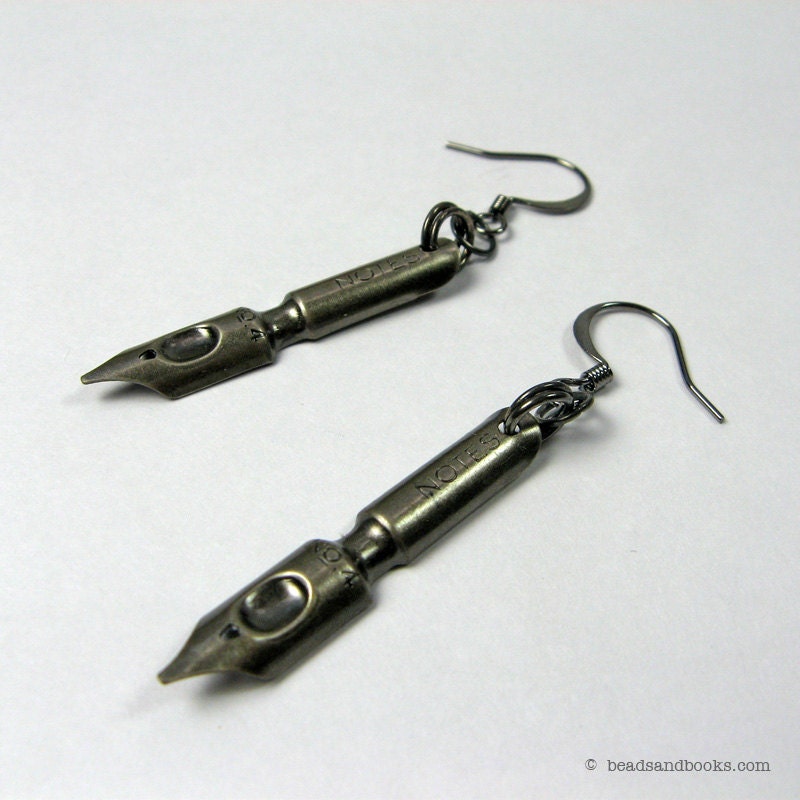
It is with very great excitement [and a dash of jealousy] that I announce the "Heigh-Ho for a Husband" giveaway! The lovely, writing and literature-themed Etsy.com shop: Michelle Mach has graciously condescended to sponsor this week's giveaway with something I have been swooning over for the past two weeks. You want to see? You're going to love it....

Oh yes. Genuine fountain-pen nibs made into earrings! 
Aren't they amazing?
I am entirely wishing I was able to be a participant in this giveaway right now! :D

The Fountain-Pen Earring Giveaway beings today, January 26, 2012, and runs to February 12, 2012. 
The giveaway will close at 11:59 p.m., Feb. 12.
Oh the ways you can win!
So here is how you can enter this giveaway to win these adorable earrings! (And to clarify, this giveaway is entirely different than the Writing Contest--I haven't announced the prize for that yet.)

Mandatory Entry:
Visit the MichelleMach shop and pick out your favorite things, then come back here and tell me about them in a comment.
One entry

Bonus Entries:

Follow this blog--two entries
Heart the shop on Etsy.com--two entries
Blog about this giveaway--two entries
Blog about this blog-party and writing contest--three entries
Buy something from the Michelle Mach shop--five entries

Now the most important thing to remember is this: 
All entries must be given in separate comment for each entry.  Therefore, if your bonus entry is following this blog, you must leave me two comments telling me you follow the blog. It's the easiest way for me to count correctly and enter you enough times in the giveaway! :) All entries that are lumped together in one comment will only be counted as one entry. So go ahead and start entering! I know you will love the earrings!

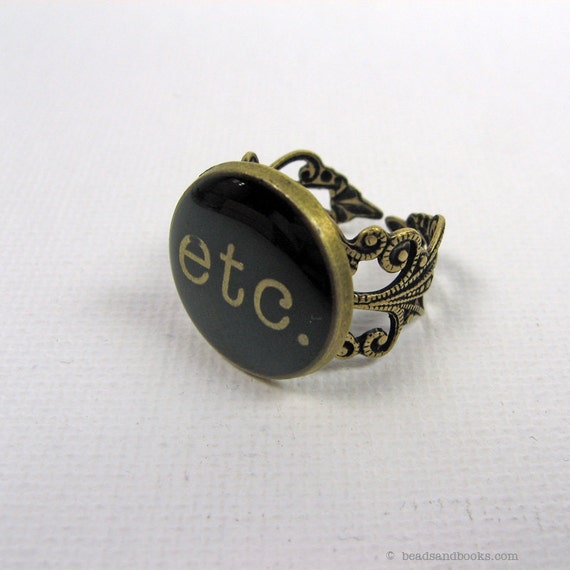
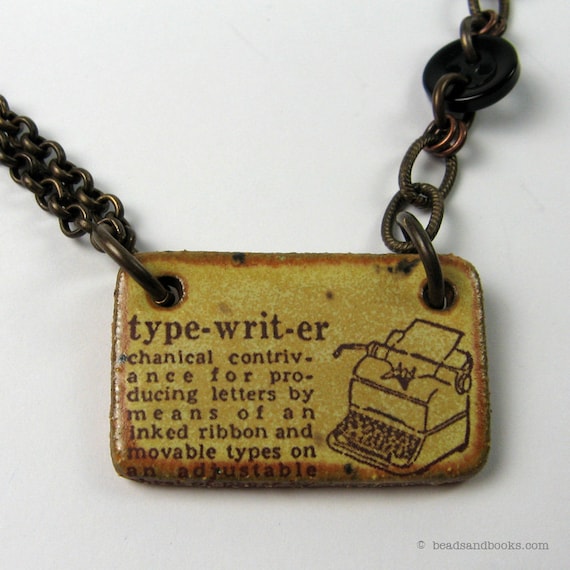
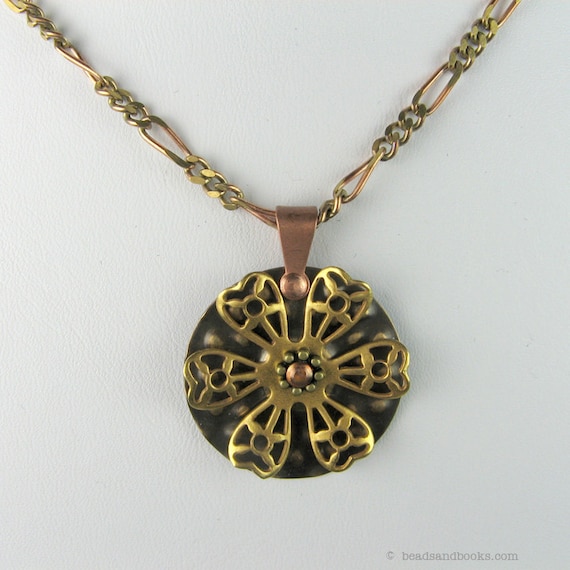
Some of my favorites from the Michelle Mach shop:


And knowing how much I adore Dickens...

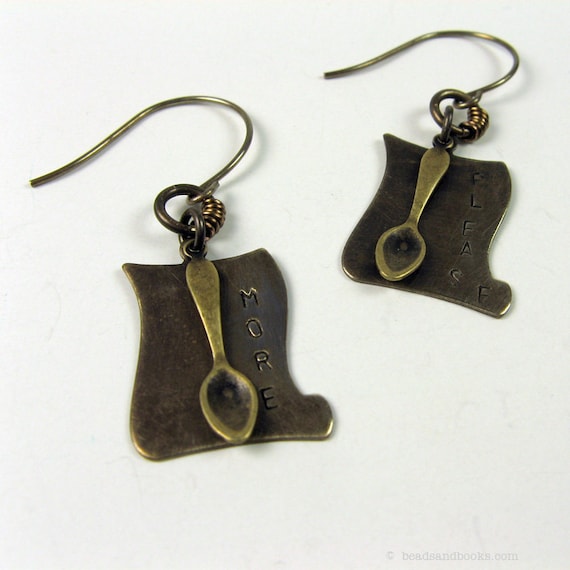
Oliver Twist earrings! :)

What are your favorites? Let the entries begin!

Saturday, December 24, 2011

It has done me good, and will do me good; and I say, God bless it!

It is so hard to believe that tomorrow is Christmas Day. It seems to me that each year I live flies by on swifter, wilder wings--I can scarce make myself realize that it has been a whole year since this time last year. December took me by storm and for quite some time I was labouring under the delusion that it was early December when we were already in the "teens". Oops. :)
There is much discussion among some circles of Christian society over whether we ought to celebrate Christmas during this time of year because it used to be a Pagan holiday. My answer to this predicament comes entirely from the mouth of Ebenezer Scrooge's nephew in A Christmas Carol:
"There are many things from which I might have derived good by which I have not profited, I dare say," returned the nephew, "Christmas among the rest. But I am sure I have always thought of Christmas-time, when it has come round-apart from the veneration due to its sacred name and origin, if anything belonging to it can be apart from that-as a good time; a kind, forgiving, charitable, pleasant time; the only time I know of, in the long calendar of the year, when men and women seem by one consent to open their shut-up hearts freely, and to think of people below them as if they really were fellow-passengers to the grave, and not another race of creatures bound on other journeys. And therefore, uncle, though it has never put a scrap of gold or silver in my pocket, I believe that it has done me good, and will do me good; and I say, God bless it!"
I do not worship my Christmas tree, nor do I celebrate the Winter Solstice. I am not leaving out cookies for Santa Clause, nor am I doing anything else questionable. At Christmas time, as all through the year (though in not so grand a degree) I celebrate the birth of my King, and I do think such an event is worthy of an entire month of celebration which--did we not use December--mightn't be carved out so easily elsewhere in the year.
I was out shopping with my older brother yesterday and found it amusing to wish everyone a "Merry Christmas" as I saw them, regardless of whether I knew them or not. The reactions were rather funny at times, as everyone sort of jumped and looked after me as much as to say, "What's she so happy about?"
It is true--I have an uncommon reason to be happy, and so have you. Because of the birth of a tiny baby--one who was born into obscurity, lived at odds with his society, died the most disgraceful death the Romans could conjure up--I have eternal life. That's something to smile about, be you white, black, young old, American, or something-else. In this best and most perfect "Merry Christmas", we have and escort into the Way Everlasting. It's a beautiful Christmas gift.

"And it was always said of him, that he knew how to keep Christmas well, if any man alive possessed the knowledge. May that be truly said of us, and all of us! And so, as Tiny Tim observed, "God bless us, Every One!"

Sunday, December 11, 2011

"Shake me up, Judy!"

Hey everybody! :) Rather than repeat myself and sound redundant ( :P) I thought I'd just send you over to my Other Blog to check out my latest literary-themed Christmas present that I made for a friend. Tell me how you like it. :)
:) I had such fun rummaging through Dickens that it was almost not work at all! I rather wish I had a copy to keep for myself though. :D
“Christmas a humbug, uncle!” said Scrooge’s nephew. “You don’t mean that, I am sure?”
“I do,” said Scrooge. “Merry Christmas! What right have you to be merry? What reason have you to be merry? You’re poor enough.”
“Come, then,” returned the nephew gaily. “What right have you to be dismal? What reason have you to be morose? You’re rich enough.”
Scrooge having no better answer ready on the spur of the moment, said, “Bah!” again; and followed it up with “Humbug.”
“Don’t be cross, uncle!” said the nephew.
“What else can I be,” returned the uncle, “when I live in such a world of fools as this? Merry Christmas! Out upon merry Christmas! What’s Christmas time to you but a time for paying bills without money; a time for finding yourself a year older, but not an hour richer; a time for balancing your books and having every item in ’em through a round dozen of months presented dead against you? If I could work my will,” said Scrooge indignantly, “every idiot who goes about with ‘Merry Christmas’ on his lips, should be boiled with his own pudding, and buried with a stake of holly through his heart. He should!”
“Uncle!” pleaded the nephew.
“Nephew!” returned the uncle, sternly, “keep Christmas in your own way, and let me keep it in mine.”
“Keep it!” repeated Scrooge’s nephew. “But you don’t keep it.”
“Let me leave it alone, then,” said Scrooge. “Much good may it do you! Much good it has ever done you!”
“There are many things from which I might have derived good, by which I have not profited, I dare say,” returned the nephew. “Christmas among the rest. But I am sure I have always thought of Christmas time, when it has come round—apart from the veneration due to its sacred name and origin, if anything belonging to it can be apart from that—as a good time; a kind, forgiving, charitable, pleasant time; the only time I know of, in the long calendar of the year, when men and women seem by one consent to open their shut-up hearts freely, and to think of people below them as if they really were fellow-passengers to the grave, and not another race of creatures bound on other journeys. And therefore, uncle, though it has never put a scrap of gold or silver in my pocket, I believe that it has done me good, and will do me good; and I say, God bless it!”
 ~A Christmas Carol by Charles Dickens

Monday, September 19, 2011

They go Together Like...Fire and Gunpowder

"There can be no disparity in marriage like unsuitability of mind and purpose." 
~David Copperfield by Charles Dickens
Oh, oh, oh! Do words ever strike you as you read them, steal your breath away, and only return--demanding compound interest--once they've rattled through your mind again and again? Or perhaps a simpler description, more to the point, would be, do you ever read something and find it resounds with your very soul? So much so that you cannot forget it? 
These words from David Copperfield did just that to me. I can't tell why, exactly. Perhaps it was because I knew David shouldn't have married Dora, and it pains me to see him pained. Perhaps it is because that is a truth I have long suspected but had never heard put down quite so perfectly.
This is, perhaps, not quite a writing post, as much as it is a post about a thought literature provoked. But one can accept a change of subject, right? 
Unequal marriages have always bothered me. Think the painful marriages in literature that make you want to punch the husband or wife clear out of the pages. Mr. Gibson and Hyacinth Clare. Richard Carstone and Ada Clare. Mr. and Mrs. Bennet...I am even tempted to add poor David and Dora to the group. But what is it that makes a marriage unequal? What is it that adds such disparity to an otherwise average couple?

1. I profess an opinion that station has nothing to do with it. As Emma Woodhouse says, "There have been many happy and unequal marriages!" Station and social status have little to do with having a happy marriage. Think of any of the successful couples in literature, and one will find that many of them were of different classes...Mr. Darcy and Lizzy Bennet. Captain Ralph Percy and Lady Jocelyn Leigh. Even Sir Percy Blakeney and Marguerite St. Just came from different backgrounds.

2. Age has little to do with it. Think of Emma and Mr. Knightley. There were 17 years between them! In fact, many  if not most of the classic couples had a span of at least 10 or 20 years age difference.

3. Similarity of personality isn't a necessity. We've all heard that opposites attract, and I can think of many cases where this is evident. Think of Mr. and Mrs. Morgan in How Green Was my Valley.

If none of these things, what is it that makes an unequal, unhappy marriage?

"My child, let me not have the grief of seeing you unable to respect your partner life." So Mr. Bennet warns Lizzy when she admits her love for Mr. Darcy. The inability to respect your partner is a large component in an unhappy marriage. But Dickens hit the nail on the head when he spoke of the subject: unsuitability of mind and purpose. A couple who cannot share the same sympathies, who cannot relate one to another, are like oxen who are supposed to be a team but are pulling in opposite direction. It just doesn't work. 
My heart is sore for poor David Copperfield. He should have married Agnes Wickfield. He totally should have married Agnes Wickfield...like, I almost wanted to throw the book across the room when his wedding with Dora actually happened. What did my sweet David ever do to deserve this?


"It was impossible to say to that sweet little surprised face, otherwise than lightly and playfully, that we must work, to live.

"'Oh! How ridiculous!" cried Dora. 'Why should you?"

"'How shall we live without, Dora?' said I.

"'How? Any how!' said Dora."
And I shall keep a tidier house, thank you.

Anyone want to help me throw the book? ;) It just set me thinking on my own marriage, someday. I shall strive to be a good wife, suited to my husbands mind and purpose. I will strive to share his hopes and dreams and support him during the rough times so that he won't, unlike David, have to hide his burden within himself when he finds I am not strong enough to bear it alongside him. ~Rachel

Sunday, August 7, 2011

My Friends of Antiquity

The sweet novels of Louisa May Alcott, the whirling gaiety of characters peopling the pages of Dickens' books, the perfect wording and heart-touching allegories of C.S. Lewis' Narnia series, the gentle humor of James Herriot's veterinary adventures, the beautiful poetry and careful mythology of Tolkein's middle earth, and the charm of Prince Edward Island and a certain red-haired lass who live there concocted by Lucy Maud Montgomery...the unbroken secrecy of that Secret Garden and the troubles of the Little Princess so unforgettably told, the wit and social juxtapositions of Jane Austen's novels, the passionate romance of Jane Eyre....these are the books I have loved and always will love.
My earliest brushes with book-love were when I was a little bit of a girl and Mama would read aloud to us. She always chose the best books, and I grew to feel as if Hans Brinker and his silver skates, or Heidi and her mountain chalet were as real to me as anybody and anyplace I knew. Mama took the greatest of care not to let us read or read to us "twoddly" books. Books that were, perhaps, popular but had no more "meat" to them than a canary. All bright feathers and no use except to provide a little amusement.
My young mind, raised on the classic tales of childhood that never grow old, soon acquired its own voracious appetite for reading. Naturally I looked to the sort of books that had started my love of literature, and before I knew it I had read Little Women a dozen times, worn down the edges of Anne of Green Gables, and could quote pieces of them by heart.
A few years later, spurred onward by mention of these works in the very books I love, I peeped my nose into The Pickwick Papers, never to lose my delight in Dickens. :) My literary tastes have been carefully cultured toward the classics: the best of the best. And I find now that I can't stomach anything less than wonderful books. It is a taste I do not wish to change, and one that I'm blessed I possess. Why would one spend time reading something second-rate when there are thick volumes of tried-and-true novels pining away in dark corners of the library for lack of sufficient modern popularity? It is my mission to hunt up these books and divulge myself of their secrets, then spread round the word and try to renew their popularity amongst my fellow literary friends. :)
There is only one problem though with my loving classic literature so much. Actually, two reasons.
1.) I know good writing when I see it, and I sometimes can't write the way I wish to.
2.) My writing has a decidedly old-fashioned flair which is not so much in vogue at present.

To address issue number one, I can but continue to practice my writing and hope that someday I might write something that may endure through the most critical eye that falls upon it.
Now issue number two. It is something I cannot change, and do not really wish to change. The things and people one loves always color one's own writing. And so among my characters and descriptions you will find distinct impressions of the people and books that have inspired me. I do not mean unoriginality. No indeed. I abhor copying, and even squirm at fan-fiction, feeling that C.S. Lewis and C.S. Lewis alone should write about Narnia. It was *his* world, and ought not to be tampered with.
But I do admit that I gain inspiration and ideas from my reading. My writing is old-fashioned, and there is nothing wrong with that. Indeed, it made me feel warm and happy when a certain sweet young lady sent me my first real "fan-mail" and said my writing reminded her of Louisa May Alcott.
These authors are the ones I grew up on, the ones I love best, the ones I would give my right hand to be like. So I do not apologize over my style. I merely wonder if it will ever find a publisher, or if it is destined to follow after Anne Shirley's Camelot dreams:
"Romance may have been appreciated in Camelot, but it certainly is not in Avonlea." ;)
And so I wondered, dear readers, if you could recommend any truly great modern books. I love Jan Karon's Mitford series. She has a certain warmth that I can identify readily with. I don't particularly want to read any of those Christian romance novels, as that is not what I write and so I have no need to read them. I am looking for books that possess the beautiful qualities of my hundred-year-old favorites. Noble ideals, clear ideas of good and evil, wit, humor, tenderness, and fantastic story-telling and description.
If you have any recommendations I would love to hear of them! You can leave them in a comment or email me, whichever you would rather.
Perhaps I have hit upon the point though. Perhaps my favorite books will always be resigned to the ranks of respectable antiquity, and my writing will follow after them without gaining much of a following. Who really cares? I will be satisfied and I trust that a kindred spirit or two will read my scribbling, detect the shadow of a mutual friend or two inside the pages, and will think of them fondly as they read.
~Rachel

Peachy-Keen Plans :)

By virtue of our position, or perhaps more correctly, because we have the largest house among the group of families that make up our homechurch, we have hosted church each Sunday for almost 2 years. But with the coming of Levi, Dad arranged for us to take a 6-week break from hosting, and this Sunday we're staying home to rest and recuperate. :) This has very little to do with anything except to set the stage for rambling on about what I'm planning on spending my afternoon doing.

I plan to be perfectly, childishly happy. :)
I plan to bury my nose deeper in David Copperfield, losing myself in the windings of the way of its pages...

I plan to smile whenever my gaze falls upon my set of new Dickens books proudly displayed on a shelf and looking terribly tempting to a book-devourer like myself...

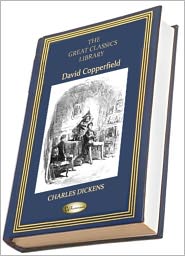
(No, this isn't my set....but isn't it lovely? *All* of his novels! I'd give a deal to possess that set! :)

And look what I found here!!! A miniature set of Dickens for a doll's house!

I plan to make something delectable and eat it...


I plan to take a walk and hope to meet a Gypsy Wind, if it isn't too hot and they're not hiding away in the secluded darkness of a shady nook...


I plan to hold Levi and cuddle him as much as I can...


I plan to write something mildly brilliant, if it will submit to being written...

In short, I plan to have a day that every authoress would consider a treat. :) Let's see if my plans come to fruition, or if the garden ruins it all. ;) ~Rachel

Tuesday, August 2, 2011

Happiness! :)

I am so happy right now...Happiness is a rather elusive state, and has nothing to do with joy, but right now, I am entirely happy. Indeed, I am.
"If I could find a man who would consent to marry me for a mere fifty pounds a year, I should be well-pleased. But such a man could hardly be sensible, and you know I could never marry someone who was out of his wits."
~Elizabeth Bennett of Pride and Prejudice
Just kidding. You all probably think I'm going to announce something terribly exciting. :D No, I am happy for a rather ordinary, and yet extraordinary reason.

Maybe it's because I just had a bowlful of Rocky Road Icecream... ;)
Maybe it's because I'm watching Colin Firth as Mr. Darcy propose to Elizabeth
Bennett...*swoon!*

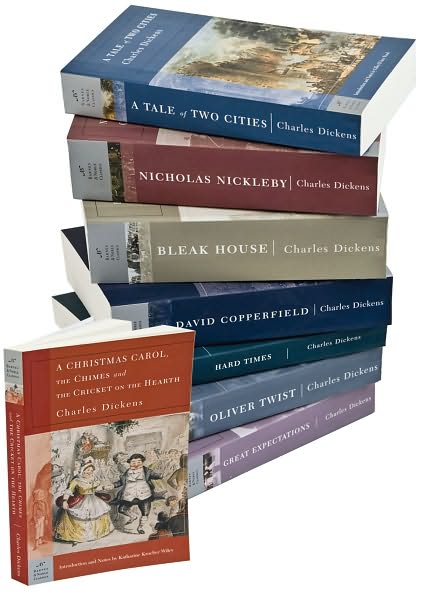
Or maybe it's because I just ordered a set of 8 Charles Dickens novels with my graduation gift card and they are due to come in 2-6 business days!!!! :) YAY!
Here is a list of the titles! I've read...half of them, I believe. Can you imagine? 8 entire chunks of amazing Dickensian literature...I can't wait to bury my nose into them. :)

David Copperfield
Bleak House
Oliver Twist
A Christmas Carol
Hard Times
Nicholas Nickleby
A Tale of Two Cities
Great Expectations
Ooh! It looks really nice this big! ;) I've read five off this list! So far (of these 8 novels) my favorites have been Bleak House and Nicholas Nickleby. :)
Ohhh....*happy sigh*....this is going to be a good night! :) ~Rachel

Sunday, July 31, 2011

The Long and Short of It

Following close on the heels of the post about description in my books, I thought it appropriate to look to the masters and see what they have to say on the subject. After all, I am only an aspiring authoress, not a critically acclaimed writer. (Though you all are sweet and encouraging indeed)
I don't mean "the masters" as in the people who sit back and point fingers and tell you how you ought to be a better writer and show instead of tell and that sort of thing. (though that is often helpful) I mean the masters who are beloved authors and whose books are destined to last throughout literature-dom. :)
I will begin with a demonstration of How Not To Do It, by Sir Walter Scott, who excelled at lengthy descriptions:
"The human figures which completed this landscape were in number two, partaking, in their dress and appearance, of that wild and rustic character which belonged to the woodlands of the West Riding of Yorkshire at that early period. The eldest of these men had a stern, savage, and wild aspect. His garment was of the simplest form imaginable, being a close jacket with sleeves, composed of the tanned skin of some animal, on which the hair had been originally left, but which had been worn off in so many places that it would have been a difficult to distinguish, from the patches that remained, to what creature the fur had belonged. This primeval vestment reached from the throat to the knees, and served at once all the usual purposes of body-clothing; there was no wider opening at the collar than was necessary to admit the passage of the head, from which it may be inferred that it was put on by slipping it over the head and shoulders, in the manner of a modern shirt, or ancient hauberk. Sandals, bound with thongs made of boar's hide, protected the feet, and a roll of thin leather was twined artificially round the legs, and, ascending above the calf, left the knees bare, like those of Scottish Highlander. To make the jacket sit yet more close to the body, it was gathered at the middle by a broad leathern belt...."
And so on and so on and so on until you wonder whether you accidentally stumbled into a costume designer 101 class instead of trying to enjoy Ivanhoe. Now, do take care in my criticism, to remember that I count Ivanhoe as one of my favorite classics, despite wading through page upon page of trifling descriptions.
This technique, of choking the reader with superfluous finery was much used during the 1800's. I guess it is just a preference. There are cases when this can be used as an effective tool. Take the opening of Charles Dicken's Little Dorrit. He uses an extremely long description of the glaring sun at the Quarantine station in Marseilles to convey actual physical discomfort to the reader. I read this book in December, but by the end of the first few pages, I truly felt hot. :) Look it up. You can read the first chapter here:
I feel like Dickens used his length to good effect, while Sir Walter Scott dabbled too long and too far in bits and pieces. However, this technique of long-winded-ness, even if it does have a point, is looked down upon these days.
The general consensus is that less is more. Showing things instead of telling them. Adding the description here and there like hidden nuggets, instead of taking time to spotlight it in its own paragraph. Take this excerpt from Jan Karon's Out To Canaan:

"At the hardware, Dora Pugh shook her head and sighed. Betrayed by yesterday's dazzling sunshine, she had done display windows with live baby chicks, wire garden fencing, seeds, and watering cans. Now she might as well haul the snow shovels back and do a final clearance on salt for driveways."

Here Jan Karon told us what the window of the hardware store looked like while still having it move the plot along and tell us something...that it was still cold out. :) The only danger with less description is that the story can begin to feel as if it's happening in a void.
The third, and one of my favorite kinds of description is one that Charles Dickens uses a lot: that of unusual comparisons and word choices. Here's an example in The Pickwick Papers:
" 'Stand aside then. Now for it.' The boy shouted and shook a branch with a nest on it. Half a dozen young rooks in violent conversation, flew out to ask what the matter was. The old gentleman fired by way of a reply. Down fell one bird and off flew the others."
"...in violent conversation, flew out to ask what the matter was." Isn't that so clever? Dickens is definitely a favorite of mine. :)
Try out the various styles of description in your own writing and see what works best! Pair them up and find the best style for you.

Monday, July 18, 2011

Vexing Inspiration :)


There is a certain phenomenon that I have noticed recently. And that is simply this:
That when I am the most pinched for time and haven't a spare moment to devote to writing even if it's the thing I long to do most, inspiration suddenly flies at me and knocks me over. ;)
Much to my sister, Sarah's chagrin, I am terrible about beginning one story and then getting inspired for another and leaving the one in a dubious state of completion while chasing the other.
But she's not a writer and she can't understand the elusive joy that comes when The Idea pops into your brain and taps you on the shoulder with a "catch me if you can" smile on its face. And I usually end up going back and finishing the first story....*after* I've done with the second. ;)
I know I'm not the only one with this problem. I've heard that Sir Walter Scott always worked on two novels at once. He placed them on separate desks and stood between the two pacing up and down. When he got an idea he'd dash to either manuscript and scribble as fast as he could.
I'm not *that* bad....or at least I don't think I am.... ;)
Puddleby Lane was coming along splendidly, but then life got to be a whirlwind of weeds and vegetables, wisdom-teeth and graduation speeches and I had to lay it aside in lieu of other more prosaic realities. That was fine in itself, except that somehow Inspiration decided to commandeer my attention and I have had the hardest time imaginable trying to ignore this perfectly amazing plot that is tumbling around my mind. Puddleby Lane is a good story and *will* be finished. I think I don't think it would be fair to poor Cora Lesley to just leave her hanging and dash off to the French Revolution. :D
So this brings me to the second random musing in my writers' brain. (As a note: I may seem to flit about from one subject to another like a distracted butterfly but I think that it's all the fault of being a writer....we all understand each other....right?)
The second random musing is......
Keep a Writing-Inspiration Notebook....I'm *going* to think of a clever name for mine.
But in this book of secrets, I pledge to write all the plot ideas, character sketches, descriptions, and everything else that floats past my Writer's Radar in this book to be pulled out, dusted off, and hung up to shine in a future day. I've done this loosely but never in an organized format...but I really think it's a good idea. What do you think?
Oh yes. And I can't forget the third and final thought I've been discussing in my head. And that is the frustrating longing to be a *great* writer like Dickens and Austen...my pen is clumsy at times and won't behave how I want it to.
But I will write all the same and I *know* practice makes perfect. Even if I never do end up a truly great writer, let it never be said of me that I stopped trying. :)
Simple things cheer me up...things like one of my favorite graduation gifts I got. The brother of one of my friends wood-burned me a sign that is destined to hang over my writing corner whenever I make it. It's a simple, wooden sign, but it made me smile with its two words:
Author's Study
Somehow that made me feel officially an authoress....that and graduating. ;) It's so funny how someone simply acknowledging your passion makes it real. Wasn't that a thoughtful gift? :)
Tomorrow I'll post my graduation speech for your observation. :) ~Rachel

Friday, May 13, 2011

An Amazing Book. Enough Said.

This afternoon I finished reading Charles Dickens' A Tale of Two Cities. I have read many of Dickens' books, but for some reason I avoided this one. I guess I assumed that because it is a popular "must read" in so many schools, that it must be a stuffy, boring book. The title isn't the most intriguing, I must admit. It sounds as if it would start "Once upon a time there were two cities and a mean king ruled one, and a kind king ruled the other." ;)
But it did not take me long to get swept into the plot. Okay, so I do have a weakness for historical novels set in the French Revolution...(think The Scarlet Pimpernel) but by the end of the book, I had fallen in love with all the characters.
There was the perfect balance of danger, mystery, and fierce loyalty to make a brilliant story. I had heard that Dickens wrote this book in sympathy with The People of France's side of the Revolution. However, as I read it, I found that Dickens showed both sides of society in an equal and fair light. He touched on the cruelness many commoners felt from the aristocrats, while also admonishing the level of cruelty and depravity the people fell to at last.
He showed the harsh and unfeeling behavior of some aristocrats while also having sympathy for those who were kind, those who were just, and those who were honorable.
But my very favorite part of the book was the last third- Sydney Carton's sacrifice. He started as a good-for-nothing, and ended up as an honorable, noble, man.
What impressed me was the symbolism between Carton and Jesus Christ. Not the particulars, (Carton was a low-life to begin with) but their selfless love and sacrifice. I felt that Dickens drew his readers to think of Jesus in the last chapters...

"These solemn words, which had been read at his father's grave, arose in his mind as he went down the dark streets, among the heavy shadows, with the moon and the clouds sailing on high above him. 'I am the resurrection, and the life, saith the Lord: he that believeth in me, though he were dead, yet shall he live: and whosoever liveth and believeth in me, shall never die.' ...A trading boat with a sail of the softened color of a dead leaf, then glided into his view, floated by him, and died away. As its silent track in the water disappeared, the prayer that had broken up out of his heart for a merciful consideration of all his poor blindness and errors, ended in the words: 'I am the resurrection and the life.'"

Then the sweet scene at the guillotine at the very end of the book when Sydney Carton is comforting a poor seamstress before pays the ultimate price for the love of a woman whose husband would otherwise be taking the punishment:

"'What then, my gentle sister?'
'Do you think'--the uncomplaining eyes, in which there is so much endurance, fill with tears, the lips part a little more and tremble--"that it will seem long to me, while I wait for her in the better land where I trust both you and I will be mercifully sheltered?'
'It cannot be, my child; there is no time there, and no trouble there.'
'You comfort me so much! I am so ignorant. Am I to kiss you now? Is the moment come?'
'Yes.'
She kisses his lips, he kisses hers; they solemnly bless each other. The spare hand does not tremble as he releases it; nothing worse than a sweet, bright constancy is in the patient face. She goes next before him--is gone; the knitting women count Twenty-two.
'I am the Resurrection and the the life, saith the lord; he that believeth in me, though he were dead, yet shall he live: and whosoever believeth in me shall never die.'
The murmuring of the many voices, the upturning of many faces, the pressing on of many footsteps in the outskirts of the crowd, so that it swells forward in a mass, like one great heave of water, all flashes away. Twenty-three."

And then the heart-wrenching last line of the book:

"It is a far, far better thing that I do, than I have ever done; it is a far, far better rest that I go to than I have ever known."

That is all. And that is enough. I appreciate Dickens showing these scenes. Jesus' gift to us is the only one that can provide comfort in situations this dire. It is the only thing that counts at the end. I have to say that A Tale of Two Cities blessed me as much as a sermon. So the only thing left to say? Amen.

Monday, May 9, 2011

Thinking Outside of the Description Box :)


When I write, I love using unusual metaphors, descriptions, etc. to show a common thing in an uncommon light.
New word pictures that haven't been used so many times you can see straight through them.
Interesting word choices.
Descriptions that make people think. But not in such a way that it leaves people puzzling over what I mean.

Dickens is the master of this illusive technique-

"The sky was dark and gloomy, the air was damp and raw, the streets were wet and sloppy. The smoke hung sluggishly above the chimney-tops as if it lacked the courage to rise, and the rain came slowly and doggedly down, as if it had not even the spirit to pour."


When I read this quote I always know exactly what the weather was like- I am almost there inside it with the characters. :)

One of my favorite descriptions of a child is found in E. Nesbit's The Railway Children:

"There were three of them. Roberta was the eldest. Of course, Mothers never have favourites, but if their Mother had had a favourite, it might have been Roberta. Next came Peter, who wished to be an Engineer when he grew up; and the youngest was Phyllis, who meant extremely well."

I absolutely *love* that description of Phyllis. Don't we all know a little child who, if not exactly well-behaved, means extremely well? :)

And then of course we have C.S. Lewis' stunning description of Aslan's voice in The Silver Chair:

"Anyway, she had seen its lips move this time, and the voice was not like a man's. It was deeper, wilder, and stronger; a sort of heavy, golden voice. It did not make her feel any less frightened than she had been before, but it made her frightened in rather a different way."

It's fun to mess around in your writing with creative descriptions. Take a description of the summer heat. Let's say this is the original that you want to spice up:
"It was the heat of summer. The air was hotter than an oven, and silent, except for the cicadas buzzing in the the trees."

You could take a sheet of paper, and write different descriptions, like this:

"It was high summer- the time of year when you're careful not to stand too close to someone for fear of sticking together."

-Or-

"It was August. The world lay in languid silence beneath the sweltering sun, all nature lulled into a heated sleep except for the insects who rasped in the trees with persistent monotony."

-Or-
"Summertime was here in earnest. Popsicle melting weather. Dash-across-the-blacktop-to-avoid-blisters-on-your-feet weather. The time of year when everyone means to do yard work, but no one gets past a glass of lemonade beneath the shade tree."

Just play around with your own ideas and try out different styles and combinations! :) It's so much fun. Oh! And I mustn't forget to remind you once again about the A Picture Is Worth a Thousand Words" contest! :) -Rachel

Thursday, March 24, 2011

The Opening Line: No Once-Upon-A-Times please :)


Elizabeth Gaskell 
I wish I was clever enough to write such captivating openings as I read in famous books! :)
Take the opening paragraph in Wives and Daughters: 
"To begin with the old rigmarole of childhood. In a country there was a shire, and in that shire there was a town, and in that town there was a house, and in that house there was a room, and in that room there was a bed, and in that bed there lay a little girl;"

Isn't that marvelous? It takes a simple opening, and by throwing in a bit of humor, lifts it to a higher plane of literature. I often find that writing opening lines is one of the hardest things of the book. As many authors will tell you, you may a gorgeous, brilliant line on page two, but if the reader isn't captivated from the time they open the book, they may never get to the second page. 
Readers are a most picky race of people. There is a saying "never judge a book by its cover", but even in my own experience I have found that if nothing catches my eye from flipping through the first few pages, I'm much less likely to read the book. 
But how to connect the reader with the principle character on the first page? You could take some notes from Charles Dicken's Great Expectations:
"My father's family name being Pirrip, and my christian name Philip, my infant tongue could make of both names nothing longer or more explicit than Pip. so, I called myself Pip, and came to be called Pip. 
      I gave Pirrip as my father's family name on the authority of his tombstone and my sister--Mrs. Joe Gargery, who married the blacksmith."

Already in that paragraph you have discovered a quaintness of character in little Pip, a rough concept of his age, the fact that his father is dead, and that his sister is married to a blacksmith. Truly remarkable a feat in only three sentences! :) 
There is, of course, always the style of barging into the story with dialog, like Louisa May Alcott does in her Little Women:
" 'Christmas won't be Christmas without any presents,' grumbled Jo, lying on the rug.
'It's so dreadful to be poor," sighed Meg, looking down at her old dress. 
'I don't think it's fair for some girls to have lots of pretty things and others girls nothing at all,' added little Amy with an injured sniff. 
'We've got father and mother, and each other, anyhow,' said Beth, contentedly, from her corner."

Again, with only a short paragraph, you are sympathetic towards the girls in this story, know a little about their family, and their personalities. 
Take stock of your own opening lines sometime, and see if you can't harness the words to work harder for you. If you play around with them long enough, you could very well end up with a glittering opening that will captivate the reader. :) ~Rachel

Friday, March 4, 2011

Check Out the Delving Into Dickens Blog Party! :)


I am hosting a Delving Into Dickens Blog Party on the blog I share with my sister. There are lots of fun ideas over there, so stop on by and please join the party if you are a Dickens Admirer! :)
~Rachel

Tuesday, June 8, 2010

A Prolific Man Indeed!

Here is a question for all of us amateurs to ponder:
"How on earth did Dickens manage to write so many, many, 4-inch thick books, and still present each one with a pound of humor and wit that never grows old?!?!"
That is what I am wondering. I marvel at this man's great talent! And have any of you been driven crazy by the knowledge that Dickens died before telling anyone the ending of the book he was writing: "The Mystery of Edwin Drood"? Argh! A mystery without an end! :( Charles Dickens was a "Maniac, and a man, and a marvel in a million!" ;) *smiles at Sarah, and anyone else who has seen "Our Mutual Friend"*